Kidney Diet for Cats – What's Important
Many cats experience kidney problems throughout their lives. Unfortunately, these are often not noticed until it's too late. This makes it all the more important to be aware of even the most subtle symptoms and to act in an emergency.
In cases of kidney insufficiency, a tailored diet in the form of a kidney diet is particularly essential. In this guide, we explain what this diet involves and what else can be done to support your cat.
What Functions Do the Kidneys Perform in the Body?
Like humans, cats have two kidneys. They perform several important functions in the body, which we will describe in detail below:
- Detoxification of the body: The kidneys remove toxins and metabolic waste products from the body via urine. Urine consists largely of water. It also contains the body's own breakdown products such as uric acid, urea, and creatinine. These are also known as uremic toxins.
- Hormone production: The kidneys produce, among other things, the hormone erythropoietin, which in turn regulates the formation and maturation of red blood cells in the bone marrow. If the oxygen content in the cat's blood drops or if there are too few red blood cells, the kidneys produce more erythropoietin.
- Blood pressure regulation: The sensors in the renal corpuscles are able to detect a drop in blood pressure. As a result, the kidneys produce renin, which is a hormone-like enzyme. This ensures an increase in the cat's blood pressure.
Diet in Case of Kidney Insufficiency
Chronic kidney insufficiency (CKI) is a common disease in older cats and is unfortunately not curable. Nevertheless, much can be done to alleviate the lives of affected animals. Kidney damage usually progresses slowly, which is why it can be halted for a long time with appropriate treatment.
To relieve the kidneys, special medications are used. In addition, infusion therapy and a special diet may be beneficial. Kidney values must be regularly checked by the veterinarian from then on, as this is the only way to determine how well the treatment is working.
Why is Kidney Insufficiency Dangerous?
In the case of kidney insufficiency, there is a dysfunction of the kidneys. As a result, toxins are no longer fully excreted via the urine as before. Nitrogen-containing metabolic end products, including uric acid, urea, creatinine, and various electrolytes such as sodium, potassium, chloride, and ammonium, enter the blood in high concentrations.
This successively leads to an accumulation of toxins in the cat's body, which causes further damage. If kidney insufficiency is left untreated, it usually ends fatally.
The disease can occur in two different forms: acute or chronic.
How the Kidney Diet Works
Through a special dietary change, also known as a kidney diet, kidney insufficiency or a kidney dysfunction in cats can be slowed down. It is important to know exactly what matters when feeding a sick cat – the following tips are helpful.
However, a precise diet plan should always be drawn up by the treating veterinarian, as they can address the individual needs of the animal.
High-Quality Proteins
While it is important for cats with chronic kidney insufficiency to continue to receive sufficient protein through their food, particular attention should be paid to the quality of the proteins fed. Cats are carnivores by nature, feeding primarily on meat with a high protein content.
Feeding high-quality protein relieves the kidneys because it can be easily utilized. This results in fewer waste products, such as nitrogen compounds. This can, among other things, reduce an increase in urea levels (uremia).
Phosphate Reduction in Food
In the course of kidney insufficiency, there is an imbalance between calcium and phosphate in the cat's body. This promotes increased parathyroid hormone excretion and hyperfunction of the adrenal glands, which in turn can have a damaging effect on the kidney. Therefore, a kidney diet must include, among other things, a reduction in phosphate.
Higher Fat Food
Many cats with kidney disease have little appetite and therefore eat poorly. More fat in their food can help limit weight loss. Fat is not only an excellent flavor carrier but also puts little strain on the kidneys.
Sufficient Potassium Content
In cases of kidney insufficiency, a metabolic derailment (metabolic acidosis) occurs, leading to an over-acidification of the blood. This can be treated with buffer salts such as sodium bicarbonate and potassium citrate.
Since sick cats usually urinate and vomit more frequently, a potassium deficiency can occur. This is compensated for by potassium citrate. Therefore, a magnesium and potassium-rich diet is recommended for cats with chronic kidney insufficiency.
To ensure that the therapy is working well, the potassium levels in the cat's blood should be checked frequently by the veterinarian.
Low Sodium Content
The impairment of kidney function results in reduced sodium excretion in the urine. This can lead to high blood pressure. A low-sodium diet is therefore beneficial.
Adequate Fluid Intake
The sick cat must absolutely drink enough fluids to avoid dehydration. Therefore, a bowl of fresh water should always be available. Some cats also prefer drinking from a so-called cat drinking fountain.
Diet wet food contains a high fluid content. In addition to water, tuna juice or meat broth can be given if the cat accepts it better.
Food Transition
Cats naturally eat several times a day. Therefore, they should always have free access to their food. This is especially true if the cat is already suffering from a lack of appetite. The special diet food can only be effective if the cat accepts it.
A food change should always be done gently. If you gradually mix increasing amounts of the diet food into the cat's regular food, it can get used to the new taste.
If a cat is already feeling unwell due to its illness, this makes the food transition even more difficult. It is likely that it will associate its discomfort with the new food and therefore have negative associations.
Prepare for Phases of Food Refusal
In the course of kidney disease, food refusal can occur repeatedly. This is often related to the cat's poor general condition or severe nausea. Even if one should prepare for these phases, they should by no means be underestimated.
Cats with chronic kidney insufficiency who eat poorly or not at all will likely suffer even more than they already do.
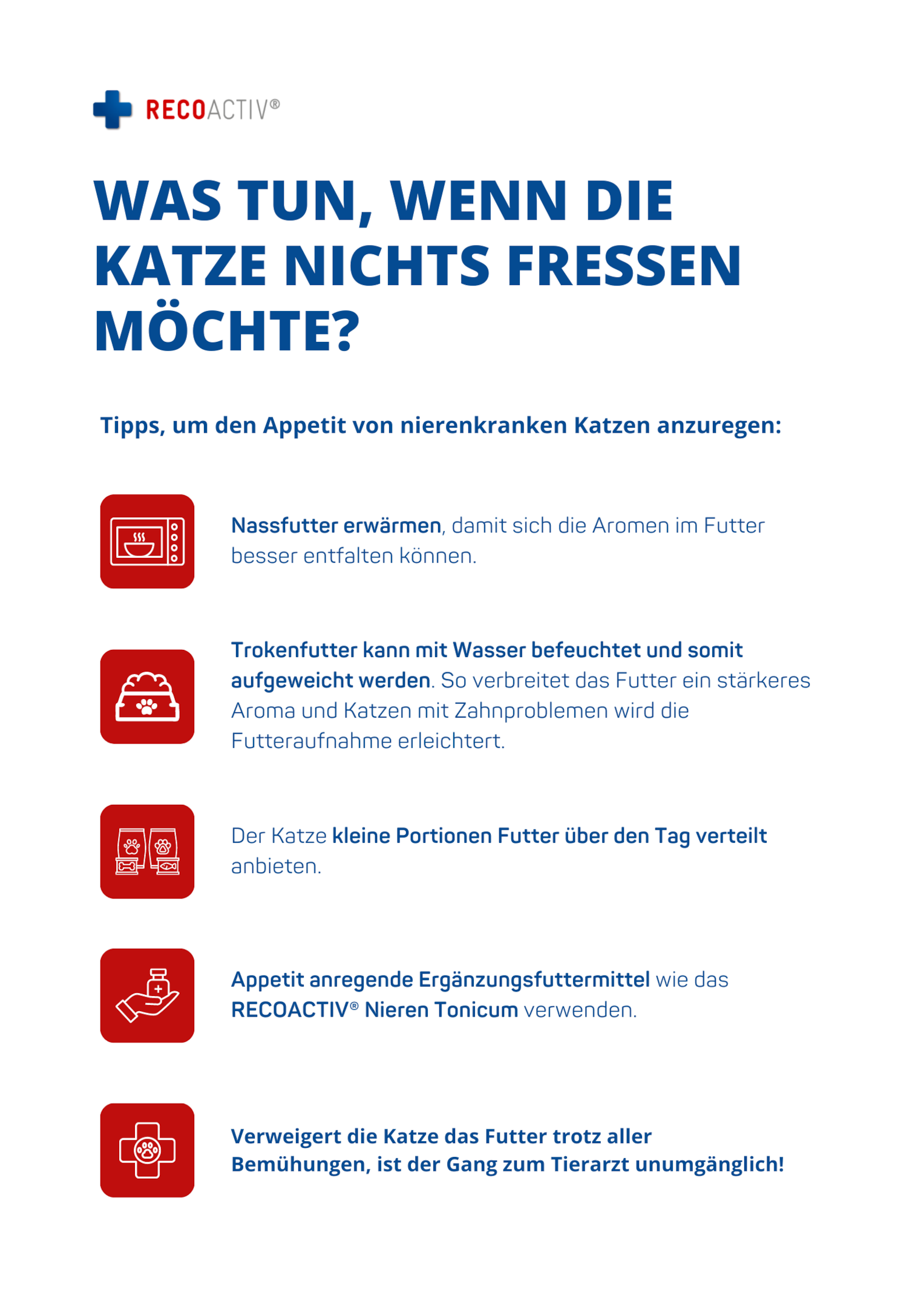
What can you do if a sick cat doesn't want to eat? In case of doubt, the answer is always: Go to the vet as soon as possible! However, you can first try to stimulate their appetite with the following tips:
- Warm up cat food: Many cats prefer warm wet food to cold. This is because aromas in warm food can develop much better. The cat smells the cat food from afar, stimulating its appetite. However, care must be taken that the food is not too hot. Cats have very sensitive mucous membranes and could burn themselves.
- Moisten dry food: Moist diet dry food also usually has a stronger aroma with a more intense scent experience. Cats with kidney disease often suffer from gingivitis, which occurs due to uremia. The soft food pulp makes chewing easier for them.
- Offer small amounts of fresh food: Instead of giving two large portions of wet food, cats should be given many small meals throughout the day. This corresponds to their natural eating behavior.
As the disease progresses, there will most likely be repeated instances of strict food refusal. One should not only be aware of this but also prepare intensely for it. Only then is it possible to provide the best possible support for the cat without having to rush to emergency services every time it refuses food.
Good strategies are:
- Consistent feeding of kidney diet food: Often, the loss of appetite in sick cats results from nausea and fatigue due to uremic poisoning. The special kidney food is intended to reduce these uremic phases. Even if the cat doesn't want to touch the kidney diet food, you should not switch back to normal cat food. In the worst case, inconsistent behavior would lead to a vicious circle from which the cat cannot escape.
- If necessary, try other kidney diets: It is therefore better to have kidney diet food in different flavors in stock. Cats with kidney disease often associate a certain food with their nausea. They don't know that their discomfort actually stems from the disease and assume that the food was the trigger. Thus, a cat cared for in a hospital may no longer want to touch the food provided there because it always associates it with stress.
- Use appetite stimulants and pastes: If the cat absolutely refuses to accept its new food, appetite stimulants and pastes can also help. However, these should only be used for a short time to bridge bad phases of the cat. In this context, the use of our Kidney Tonic is also useful, as it can be given to support the kidney diet. Above all, it helps in the phase of food transition, as it stimulates appetite.
- Liquid food or electrolyte solution: Cats with kidney disease often have a lot of thirst. This can be used to add a little extra energy to the liquid. However, if the cat does not want to drink by itself, the liquid food should be given into its mouth with a syringe.
FAQ
Every cat is different, and the same applies to the course of kidney insufficiency. In this context, cat owners often have specific questions, which we will now address in more detail.
What can a cat with kidney disease eat?
A cat with kidney disease should primarily receive muscle meat, which is characterized by a high-fat content. Examples include duck and goose meat or fatty beef. Once a week, a fatty fish like mackerel or salmon can also be on the sick cat's menu.
What should a cat with kidney disease not eat?
Basically, a cat with kidney disease should only receive special, high-fat meat that contains many high-quality proteins. An excess of carbohydrates should definitely be avoided.
What is good for cat kidneys?
A kidney diet consisting of magnesium and potassium-rich food is best for a cat's kidneys. Potassium levels in the cat's blood should be checked regularly.
What is a kidney diet for cats?
A kidney diet for cats is a special food that has been perfectly adapted to the altered needs of a cat with kidney disease. However, switching to this food can sometimes be difficult. In any case, the food transition must be done slowly, allowing the cat 3-4 weeks to get used to it.
While initially only up to two teaspoons of kidney diet food should be mixed into the old food, the amount must be increased every few days, while reducing the amount of the original food by the same amount.
Conclusion
Kidney insufficiency presents cats and their owners with many challenges. It is important to have the cat regularly examined by a veterinarian and to switch the food to a so-called kidney diet. Kidney diet food is characterized, among other things, by being higher in fat and having a high content of valuable proteins. The symptoms that occur with chronic kidney insufficiency can thus be curbed and the course of the disease slowed down.
Even if the cat accepts the new food poorly or not at all, it is essential to remain consistent. However, this is not always easy for cat owners. Nevertheless, cats can be encouraged to eat with a few tricks. For example, you can warm up their food or soak dry food so that it emits a more intense scent.
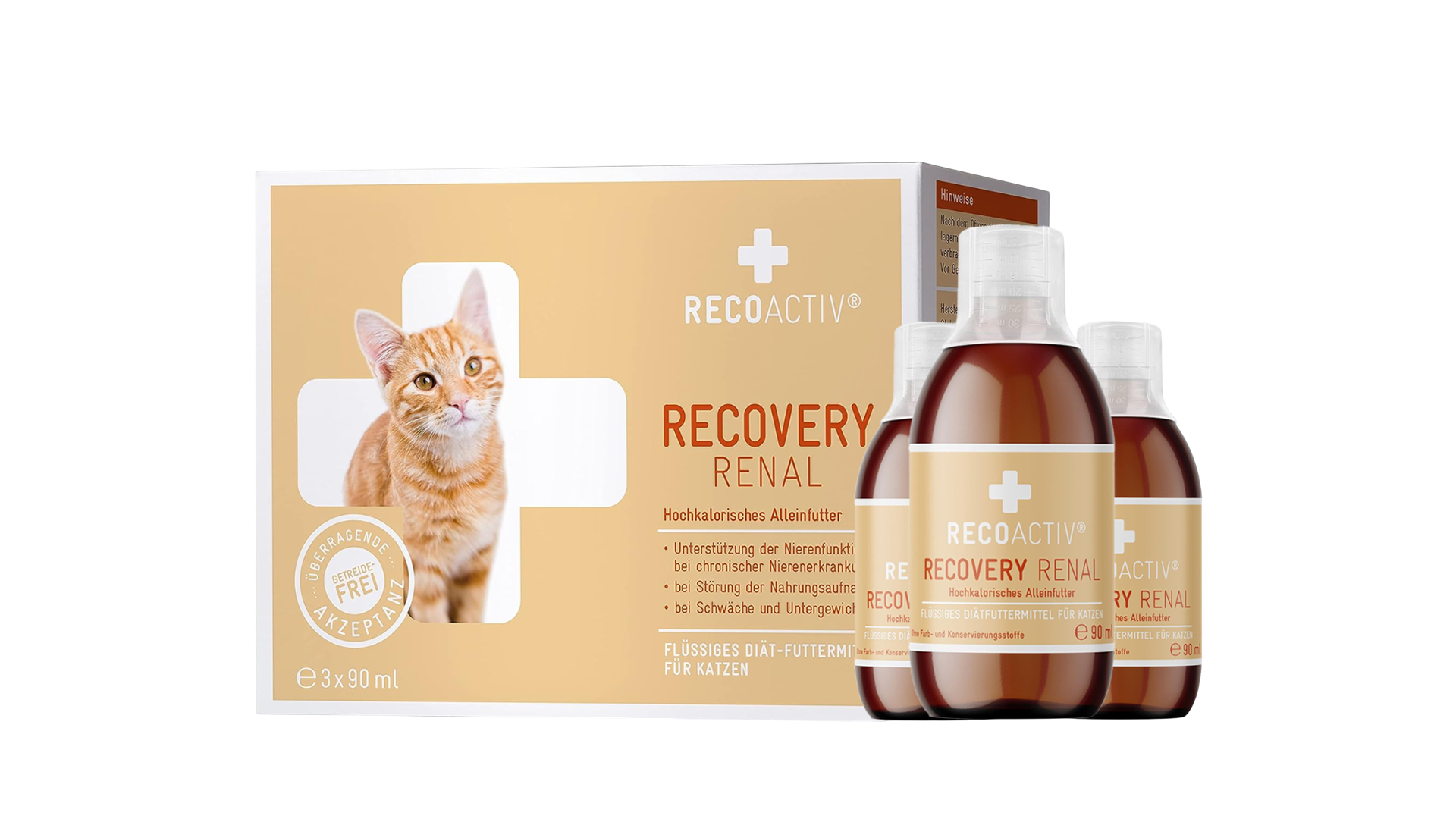
A good way to support cats during the transition to a kidney diet is to administer Recoactiv's Kidney Tonic. This is characterized by low mineral levels and reduced phosphorus content, as well as high-quality and easily digestible proteins. Due to its liquid form, cats even consume additional moisture when eating it.
FAQ – Frequently Asked Questions
What can a cat with kidney disease eat?
A cat with kidney disease should primarily receive muscle meat, which is characterized by a high-fat content. Examples include duck and goose meat or fatty beef. Once a week, a fatty fish like mackerel or salmon can also be on the sick cat's menu.
What should a cat with kidney disease not eat?
Basically, a cat with kidney disease should only receive special, high-fat meat that contains many high-quality proteins. An excess of carbohydrates should definitely be avoided.
What is good for cat kidneys?
A kidney diet consisting of magnesium and potassium-rich food is best for a cat's kidneys. Potassium levels in the cat's blood should be checked regularly.
What is a kidney diet for cats?
A kidney diet for cats is a special food that has been perfectly adapted to the altered needs of a cat with kidney disease. However, switching to this food can sometimes be difficult. In any case, the food transition must be done slowly, allowing the cat 3-4 weeks to get used to it.
Why is phosphate reduction in food important?
In the course of kidney insufficiency, there is an imbalance between calcium and phosphate in the cat's body. This promotes increased parathyroid hormone excretion and hyperfunction of the adrenal glands, which in turn can have a damaging effect on the kidney.
How can you stimulate the appetite of cats with kidney disease?
You can warm up cat food to allow aromas to develop better, moisten dry food for a more intense scent and softer consistency, or offer small amounts of fresh food throughout the day, which corresponds to the cat's natural eating behavior.
What to do if a cat with kidney disease refuses food?
In case of doubt, you should go to the vet as soon as possible. Additionally, you can try warming up the food, moistening dry food, offering small meals, or using appetite stimulants and pastes short-term to bridge bad phases.
Why is fluid intake important for kidney failure?
It is essential for the affected cat to consume enough fluids to prevent dehydration. Diet wet food has a high fluid content, and tuna juice or meat broth can be given in addition if the cat prefers them.
```