Taurine for Cats – Why is it so Important?
Cats are among the most popular pets in Germany. Of course, cat owners want their furry friends to lack nothing, to be healthy and completely happy. However, this requires a balanced diet adapted to their needs.
The amino acid taurine plays an important role, as it contributes to the development and health of cats' hearts, ears, eyes, and immune system. It is also crucial for reproduction.
Taurine - what is it?
Taurine is an essential amino acid that performs important tasks in the cat's body for metabolism, fat utilization, brain development, as well as heart and retinal function.
Taurine is an essential amino acid that is produced in the liver of mammals. It is formed from methionine and cysteine, two sulfur-containing amino acids, and from coenzyme A. Although taurine is not used as a building block for proteins in the body, it is of central importance for the following bodily processes:
- Promoting the absorption of fat-soluble vitamins and dietary fats
- Brain development of kittens and young cats
- Messenger substance in the regulation of body temperature
- Contribution to maintaining healthy retinal and heart function
In addition, taurine has a stabilizing effect on cell membranes, serves to bind toxic substances in the liver, and has an antioxidant effect, which enables the elimination of free radicals.
Why is taurine important for cats?
Cats cannot produce enough taurine themselves and therefore must regularly consume it through their food so that important bodily functions are reliably supported.
Cats are unable to synthesize enough taurine themselves in their liver. This is because the enzymes responsible for this are only slightly active in cats. Cats therefore need regular taurine through their food. However, the exact amount varies from cat to cat. Older, pregnant, or nursing cats, for example, require a higher amount of taurine. The assumption that some cat breeds, such as Siamese, need more taurine than others, has not yet been proven.
Essential for metabolism
The cat's body primarily needs taurine for a functioning metabolism and healthy digestion. Taurine regulates body temperature and also supports the absorption of valuable fats from food. It is of great importance for the brain development of growing cats and can even influence their sense of smell.
Consequences of taurine deficiency in cat food
If the cat receives too little taurine through its food, it can develop deficiency symptoms. The insidious thing about this is that these usually only become noticeable late. Many cats show the first symptoms only after the taurine deficiency has existed for half a year, and some even only after two years. Possible symptoms include the following:
- Irreversible retinal degeneration, which can lead to blindness in the cat
- Increased fetal mortality if the cat is pregnant
- Weakened immune system
- Heart muscle diseases, which manifest themselves through pale mucous membranes or apathy in the cat
- Slowed development of kittens
- Aggressive, nervous behavior
Providing the cat with sufficient taurine
Adequate taurine supply is possible through suitable food or supplementary preparations, with raw meat being particularly rich in taurine.
While wild cats get taurine by eating captured animals, domestic cats rely on their owners to do so. Fortunately, taurine is found in almost everything cats eat. However, it should be noted that it is very heat-sensitive. Meat or animal hearts containing taurine should therefore preferably not be cooked or fried.
Give raw meat
Providing a cat with enough taurine is best achieved by feeding raw meat. Especially in the heart or skeletal muscle, but also in the brain or liver, there is plenty of taurine. In addition, liquids, including blood and mother's milk, but also the retina and bile salts, contain a lot of taurine.
In general, dark meat has a higher taurine content than light meat. The mouse is a popular prey animal for cats and is also considered the land animal with the highest taurine content (140 to 270 milligrams per 100 grams). Seafood and fish follow closely behind. Plants generally do not contain taurine, with some aquatic plants and the prickly pear being exceptions.
Taurine is contained in almost every cat food
In cat food labeled as complete food, taurine should normally be present in sufficient quantities. However, cat food often differs in its composition and quality. Thus, inferior cat food may only contain the minimum amount of taurine. This can still lead to a deficiency in the cat.
As already mentioned, the highest taurine content is found in raw meat. In canned or packaged cat food, the meat has been pre-treated, usually heated. However, taurine is not heat-stable and can be destroyed by strong heat.
Dietary supplements
An adequate taurine intake for the cat can also be ensured via supplementary preparations. These are simply mixed into the regular food. This ensures that the cat always receives the right amount of taurine daily. Pure taurine in powder form is particularly suitable here, as it dissolves when added to warm water.
If only taurine is to be administered to the cat, products that only have a taurine additive should be avoided. They also contain other ingredients, including fats and sugars, and these should not be fed too often. Most cats love snacks or milk with taurine, but these products are not suitable if the only goal is to give the cat the necessary amount of taurine per day.
An overdose of taurine in cats is quite difficult, but not impossible. Therefore, one should always keep an eye on the animal's needs and never provide larger quantities.
The right dose of taurine for cats
Depending on age and weight, a cat needs about 200 to 500 milligrams of taurine daily, with heavier animals usually having a higher requirement.
A cat should consume between 200 and 500 milligrams of taurine daily. The 500 milligrams refer to an adult cat weighing 4 kilograms. The exact taurine requirement depends on the cat's age and weight. Accordingly, heavier cat breeds require higher amounts of taurine.
If it is found that the food provided to the cat does not contain a sufficient amount of taurine, it should be replaced with another. The amount of taurine must always be indicated on the label of the cat food.
Conclusion - Taurine for cats at Recoactiv
Taurine is indispensable for cats, as they cannot produce this amino acid sufficiently themselves. In case of uncertainties regarding the supply or suspicion of deficiency, veterinary advice should be sought.
Taurine is an essential amino acid that cats can only produce insufficiently in their bodies. Therefore, they need a sufficient amount of taurine per day through their diet. In high-quality cat food (complete feed), this is normally the case. However, raw meat is even better for the cat.
How important the supply of taurine is for a cat is shown by the possible deficiency symptoms, which include blindness. In such cases, one should definitely seek help and support from a veterinarian.
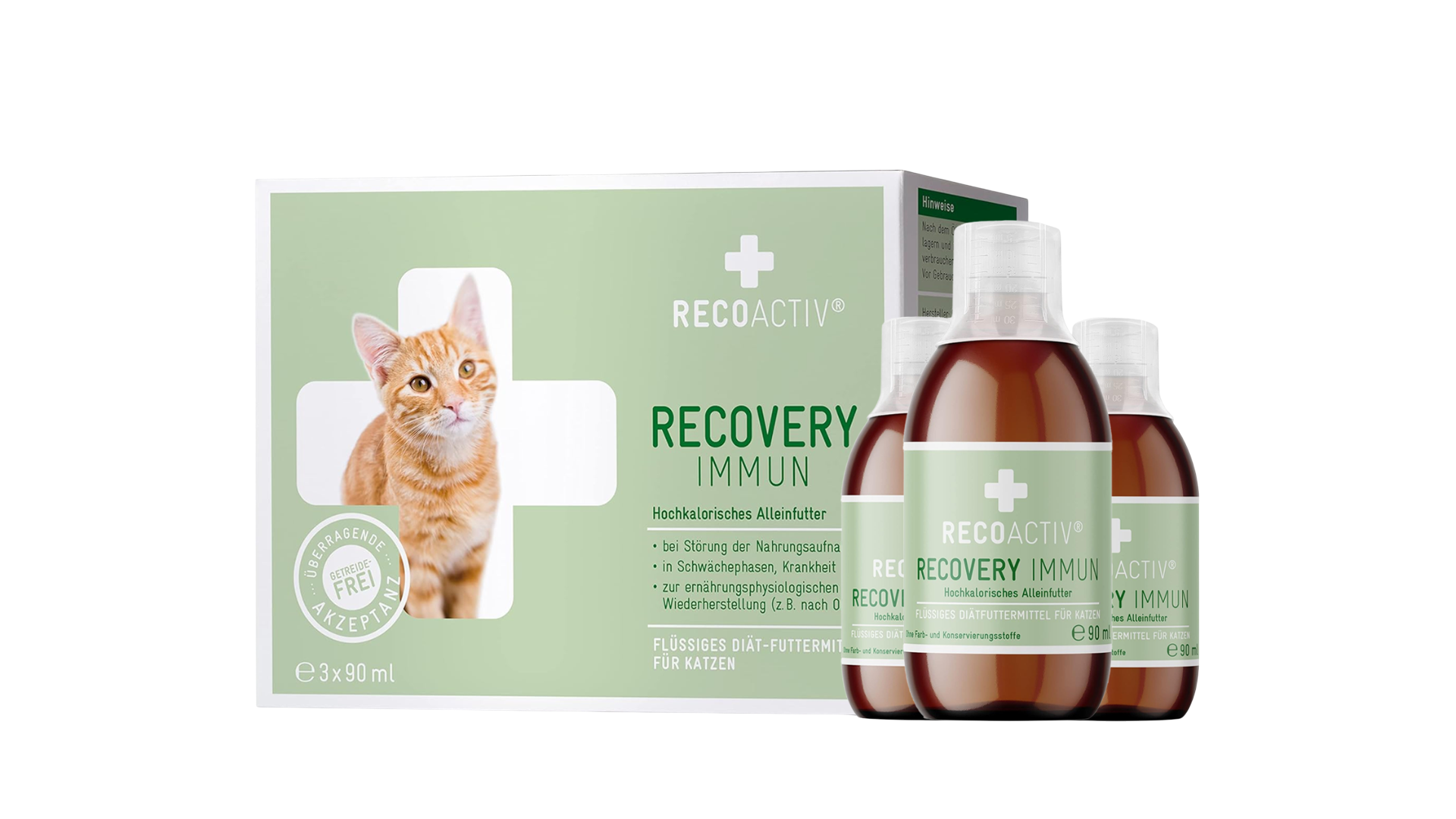
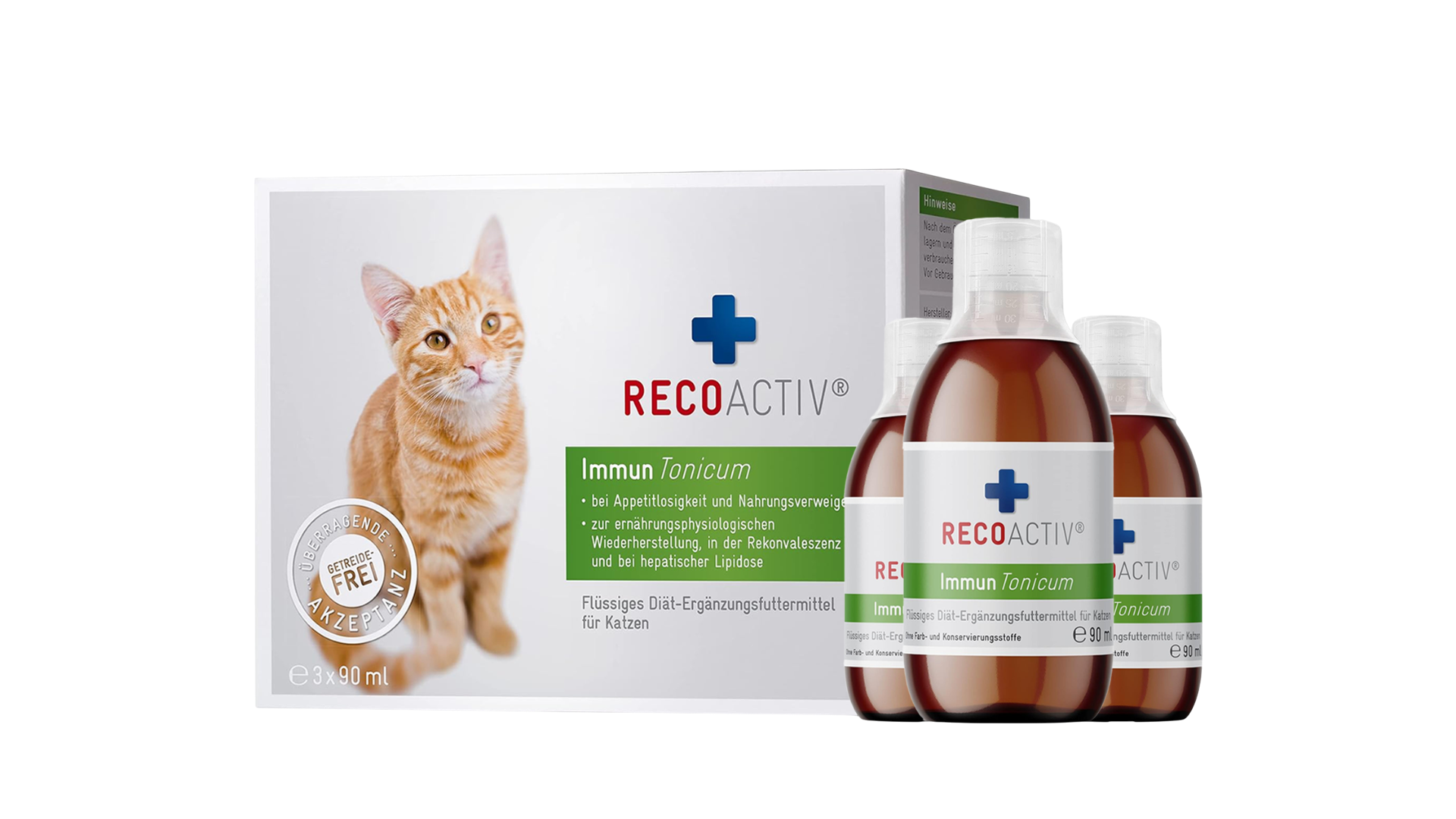
The best cat food is useless if it has been heated too much during the manufacturing process. This destroys taurine. If you want to make sure that the cat receives enough taurine every day, you should resort to dietary supplements. This makes it easy to check how much taurine the cat consumes per day. Recoactiv offers high-quality dietary supplements with taurine that are very well accepted by most cats. To prevent the cat from suffering from deficiency symptoms, nothing should be left to chance.
FAQ – Frequently Asked Questions
What is taurine and what functions does it perform in the cat's body?
Taurine is an essential amino acid that performs important tasks in the cat's body for metabolism, fat utilization, brain development, as well as heart and retinal function. It promotes the absorption of fat-soluble vitamins and dietary fats, supports the brain development of kittens and young cats, regulates body temperature, contributes to maintaining healthy retinal and heart function, stabilizes cell membranes, binds toxic substances in the liver, and has an antioxidant effect.
Why do cats need to get taurine from their diet?
Cats cannot produce enough taurine themselves because the enzymes responsible for this in their liver are only slightly active. Therefore, they must regularly consume taurine through their food to reliably support important bodily functions.
What consequences can taurine deficiency have in cats?
Taurine deficiency can lead to irreversible retinal degeneration with blindness, increased fetal mortality in pregnant cats, weakened immune system, heart muscle diseases (recognizable by pale mucous membranes or apathy), slowed development of kittens, and aggressive and nervous behavior. Symptoms often only appear after half a year or even after two years.
How can cats best be supplied with sufficient taurine?
The best supply of taurine is through feeding raw meat, especially heart or skeletal muscle, brain, and liver, as these are rich in taurine. Blood, mother's milk, retina, and bile salts also contain a lot of taurine. Since taurine is heat-sensitive, meat products should preferably not be cooked or fried. Alternatively, taurine can also be supplemented via powdered supplements.
Is taurine contained in commercial cat food and are there differences in quality?
Cat food labeled as complete food should normally contain sufficient taurine. However, the composition and quality of the food vary, so inferior cat food often contains only the minimum amount of taurine, which can lead to deficiency symptoms. In addition, taurine is partially destroyed by heating during the production of canned or wet food, as it is not heat-stable.
What is a cat's daily taurine requirement?
Depending on their age and weight, cats need approximately 200 to 500 milligrams of taurine daily. The 500 milligrams refer to an adult cat weighing 4 kilograms. Heavier cat breeds have a higher requirement.
Can taurine also be given to cats via supplements, and what should be considered?
Yes, taurine can be supplemented in powder form, which dissolves well in warm water. Pure taurine products should be used, and not products with additional ingredients like fats or sugar, which should not be fed too often. The dosage should correspond to the cat's needs to avoid an overdose.
What role does taurine play in the development and health of cats?
Taurine is crucial for the development and maintenance of a cat's heart, ears, eyes, and immune system. It supports the brain development of kittens and young cats, contributes to body temperature regulation, and is important for reproduction.