Bland Diet for Cats – Tips for Cat Owners
A gentle diet for cats can help alleviate digestive problems such as diarrhea, vomiting, and bloating. Cat owners can also counteract weight loss with the correct nutrition for their pet. It is crucial that the bland diet is tailored to the cat's individual needs, is short-term, and is implemented in consultation with a veterinarian.
But what characterizes a bland diet for cats, and when does the feline friend need special nutrition to protect its gastrointestinal tract? What symptoms can be treated with a short-term dietary change? And how do cat owners prepare easily digestible food for their four-legged friend?

All about Bland Diets for Cats
A bland diet for cats is a short-term, easily digestible form of nutrition, primarily used after operations or in cases of gastrointestinal infections to relieve the digestive tract.
Cats are known to be picky about their food. However, some situations require a special diet. For example, cats can benefit from a dietary change, maintained for about 10 days, after an operation or as a result of a gastrointestinal infection.
It is crucial that the bland diet is used as a short-term therapy. Because if a cat receives a bland diet for a long period, it can lead to malnutrition and a deficiency of nutrients.
What is a bland diet?
The term bland diet refers to easily digestible food. This can be a special dry or wet food. The food usually consists of a protein source, such as chicken breast, carbohydrates like potatoes, and fiber. Fat is avoided.
Adult, healthy cats receiving a bland diet should not be given treats or other cat food. Nutritional supplements should not be added if the cat is adult and healthy. Furthermore, the administration of nutritional supplements should always be discussed with the veterinarian.
Depending on the clinical picture, various foods are used. For example, soft-cooked, pureed carrots can help fight pathogens. Grated apples, in turn, can influence the consistency of intestinal contents.
Choosing the right bland diet: important tips & information
Meat, fish, and eggs serve as protein sources. The protein component can be combined with stomach-friendly foods such as carrots or apples. When preparing meals, cat owners can follow their pet's preferences.
Buy or prepare a bland diet yourself?
A bland diet can be purchased as wet or dry food in stores. It is also possible to prepare the bland diet yourself, thereby influencing the food components.
If it is necessary to feed the cat a bland diet for a longer period, the addition of nutritional supplements, such as Vitamin E for cats, can be done in consultation with the veterinarian.
When does a cat need a bland diet?
A cat primarily needs a bland diet when gastrointestinal problems are present or a temporary dietary change is necessary, for example, after illnesses or procedures.
A balanced diet can influence a cat's health. Outdoor cats mainly hunt small vertebrates like mice. The fresh meat provides them with valuable proteins, vitamins, trace elements, and fiber. At the same time, cats consume the stomach contents of their prey, thus ingesting plant components.
House cats, on the other hand, depend on the food that their owners provide. This should meet their increased protein needs. A purely plant-based diet would lead to the pets consuming too few proteins and amino acids. For this reason, cat owners should ensure that the wet or moist food provides a balanced and complete diet.
If the feline friend suffers from gastrointestinal problems or there are other reasons that speak for a short-term dietary change, cats receive a special, stomach-friendly diet in consultation with the veterinarian.
Bland Diet for Cats for Various Symptoms
A bland diet can be useful for cats with various ailments, including diarrhea, vomiting, abdominal pain, refusal to eat, or as a transition food after a severe illness.
Cats usually eat small portions every four hours. The bland diet is also administered in portions throughout the day. The ailments that can be treated with a bland diet are diverse. An example is diarrhea, where the cat loses increased fluids.
But vomiting can also lead the veterinarian to recommend the use of a special diet. It is crucial to determine the cause of the ailment. For example, a cat eating grass may vomit after consuming grass blades, which usually does not require veterinary treatment.
The bland diet can be administered in the following scenarios:
- Diarrhea
- Vomiting
- Abdominal pain
- Refusal to eat
- Toothache
- Overexertion of the gastrointestinal tract
- After a prolonged or severe illness as a transition food
Bland Diet for Cats with Stomach Problems and Vomiting
If the cat suffers from gastrointestinal problems, cat owners should prepare a stomach-friendly diet and provide the feline friend with 6 to 10 portions of the bland diet from the vet's office or commercially available products throughout the day. Alternatively, it is possible to prepare the food yourself. Giving the bland diet prevents irritation of the stomach.
For stomach problems, cat owners can, for example, use lean beef or chicken, cooked potatoes, or soft-boiled rice. The protein content should be twice as high as the carbohydrate content.
In addition to pathogens, stressors such as other cats or an unsuitable location for the litter box can cause the cat to suffer from diarrhea or vomiting.
If the stool becomes significantly firmer after a few days, the bland diet can be slowly phased out and regular food can be given.
Bland Diet for Cats with Diarrhea
If a cat has diarrhea, the veterinarian may recommend a bland diet. Typically, small meals of cooked chicken and rice are advised. This can specifically relieve the digestive system. An old cat has diarrhea if infections or illnesses are present. Compared to a young cat, the risk of illness increases with age.
Bland Diet for Cats with Pancreatic Problems
Acute pancreatitis must be treated by a veterinarian. Following therapy, cat owners should provide the weakened feline friend with light, easily digestible food. Carbohydrates should be avoided if the cat suffers from diabetes.
Tips and Tricks for Preparing a Bland Diet for Cats
Those who prepare a bland diet themselves can specifically select ingredients and better account for intolerances. High-quality ingredients, good preparation, and gentle processing are important.
Those who prepare a bland diet for their cat themselves retain control over the ingredients of the food. This ensures that only high-quality ingredients are used and that no additives are present. In addition, preferences or intolerances can be taken into account.
It is important that the bland diet is not used as part of a weight loss diet. Any therapy should be done in consultation with a veterinarian to avoid malnutrition of the animal.
How do I prepare?
The preparation of the bland diet should be preceded by a certain preparation time. So that the meals both support the animal in its recovery and are accepted by the willful pet, some central points should be considered.
Salt should not be used. Also, other spices that irritate the cat's stomach are not recommended. In addition, no lactose-containing foods should be included, as cats are usually sensitive to dairy products. After an operation or during an acute illness, the body is weakened, and the stomach should not be further stressed by lactose.
Furthermore, it is advisable not to serve the bland diet too cold or too warm. Room temperature is considered optimal. In addition, the cat should receive sufficient water.
Which bland diet can you easily prepare yourself?
Fish is excellent for preparing an easily digestible meal for your feline friend. It should be skinned, deboned, and minced. In combination with a grated apple or a soft-cooked, pureed carrot, the dish can have a diuretic and antibacterial effect.
If cat owners use chicken schnitzel, it should not have breading or seasoning. Cooked and minced, the stomach-friendly meat is excellent for preparing a bland diet.
Chicken broth, in turn, can compensate for fluid loss during a bout of diarrhea. A strong broth can be made from a soup chicken, carrots, and water within three to four hours.
These foods are suitable for a bland diet:
- Fish
- Chicken
- Chicken broth
The following recipes are suitable for a cat with a body weight of 4 kilograms:
- Chicken breast with potatoes: Cat owners boil 20 grams of peeled and diced potatoes and 80 grams of chicken breast with 10 grams of dry rice in water. After 30 minutes, the food can cool down and be fed throughout the day.
- Fish with rice and carrots: 100 grams of pollock, 20 grams of carrots, and 10 grams of dry rice are boiled in water for 30 minutes. After cooling, the bland diet can be administered in portions.
- Fish with carrots and potatoes: 80 grams of salmon, 25 grams of potatoes, and 20 grams of carrots are boiled. After 30 minutes, the food can cool down and then be offered to the cat throughout the day.
Conclusion – Bland Diet for Cats at Recoactiv
A bland diet can effectively support cats during acute illness or after procedures, provided it is appropriately composed and used only temporarily.
Seeing one's own cat suffer during an acute illness or after a surgical procedure probably worries every cat owner. However, complaints such as stomach problems can be alleviated by administering a bland diet for the cat.
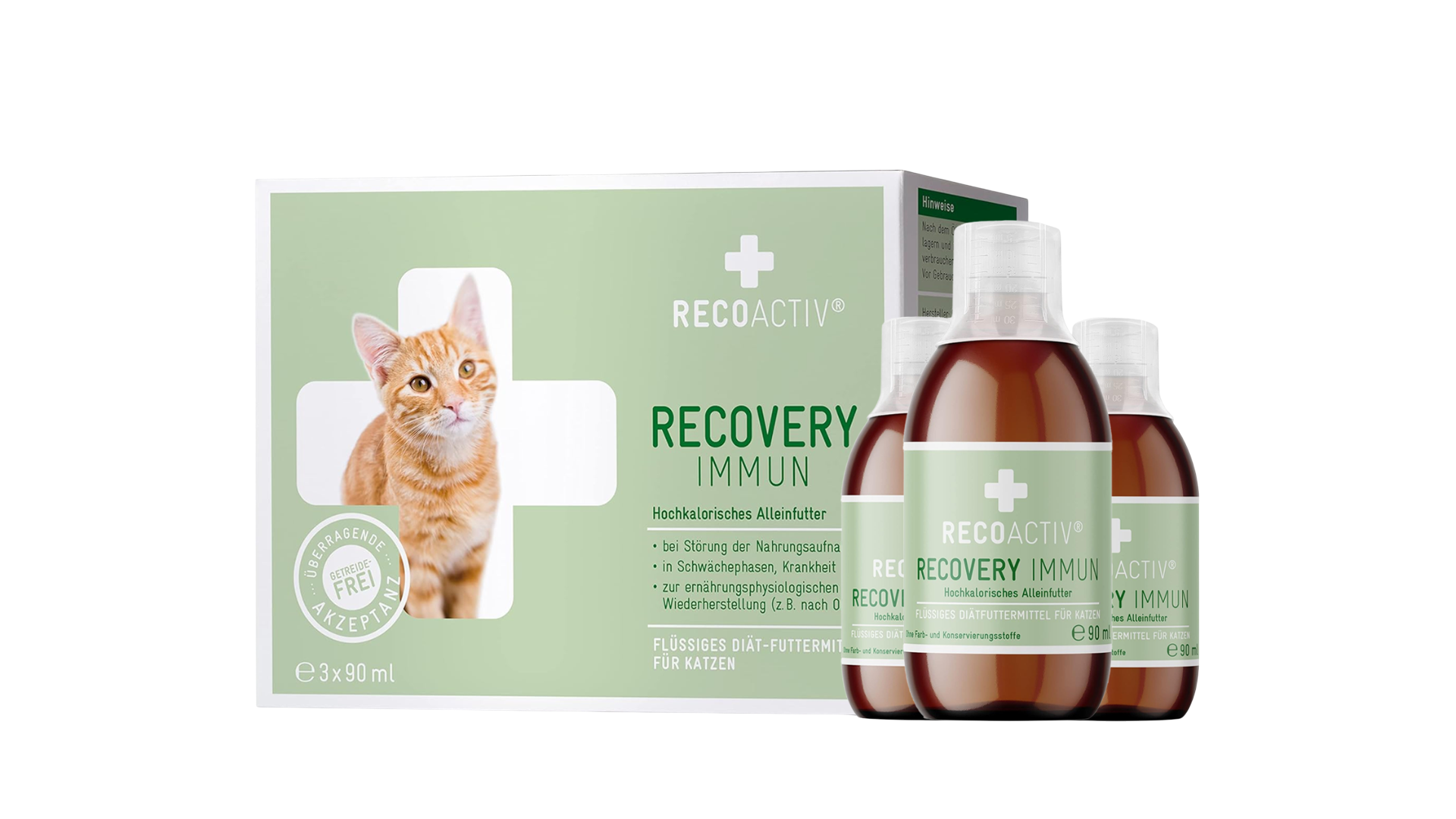
Foods such as fish, meat, carrots, or apples are either available in ready-made bland diet meals from stores or can be processed independently into stomach-friendly food. The bland diet can be supplemented with nutritional supplements from Recoactiv. In any case, the bland diet should only be implemented in consultation with a veterinarian.
FAQ – Frequently Asked Questions
What is a bland diet for cats and when is it used?
A bland diet is a short-term, easily digestible form of nutrition for cats, primarily used after operations or in cases of gastrointestinal infections to relieve the digestive tract.
What foods are typically used in bland diets for cats?
Bland diets typically consist of a protein source like chicken breast, carbohydrates like potatoes, and fiber, with fat being omitted. Depending on the illness, soft-boiled, pureed carrots or grated apples may also be used.
Why should bland diets for cats only be used short-term?
Long-term administration of a bland diet can lead to malnutrition and nutrient deficiency, which is why it should only be used as a short-term therapy of about 10 days.
When is the use of bland diets particularly beneficial for cats?
Bland diets are particularly beneficial for gastrointestinal problems such as diarrhea, vomiting, abdominal pain, refusal to eat, toothache, overexertion of the gastrointestinal tract, or as transition food after a severe illness.
How should a bland diet be administered to cats with stomach problems or vomiting?
The bland diet should be fed in 6 to 10 small portions spread throughout the day, ideally with lean beef or chicken, as well as cooked potatoes or soft-boiled rice, with the protein content being twice as high as the carbohydrate content.
What special considerations apply to bland diets for cats with pancreatitis or diabetes?
After pancreatitis, the cat should be fed light, easily digestible food, and carbohydrates should be avoided in cases of diabetes.
Can bland diets for cats be bought or prepared at home, and what should be considered?
Bland diets can be bought commercially as wet or dry food or prepared at home. When preparing it yourself, cat owners have control over the ingredients and can better account for intolerances. High-quality ingredients, good preparation, and gentle processing are important.
Should adult, healthy cats receive nutritional supplements while on a bland diet?
Adult, healthy cats should not receive treats or additional nutritional supplements while on a bland diet, unless explicitly agreed upon with the veterinarian.