Cats with Dementia – Useful Supplements
Most domestic cats today live longer than their wild ancestors did. However, for cats as well as dogs, the risk of certain diseases also increases in their senior or geriatric years. This often affects mental abilities such as learning behavior, memory, and attention.
Yes, dogs and cats can also develop dementia, although the term is not primarily used in veterinary medicine. The condition is also called cognitive dysfunction. Special nutritional supplements for cats can be used to support medication and therapies in cases of developing dementia. We explain what these are and what to look out for.
Dementia in Cats
When a cat gets older, its brain naturally ages too. This can lead to problems with memory and attention. To find out if your cat is suffering from dementia, you must first have her examined by a veterinarian. Only with the right expertise can a correct diagnosis be made. This is also necessary for the further treatment of the affected cat.
Diagnosis
In the context of cognitive dysfunction, cats experience various behavioral changes. However, these can be non-specific and therefore also indicate other diseases. These include, for example, hyperthyroidism, chronic kidney failure, and diabetes mellitus.
If the cat exhibits altered behavior, as described below, the causes must be clarified by a veterinarian as quickly as possible. Especially in older cats, there is often an initial suspicion of cognitive dysfunction. However, the diagnosis can only be made when other possible causes have been ruled out through appropriate examinations.
After a visit to the veterinarian and a clear diagnosis, more suitable nutritional supplements for cats can also be found.
Symptoms
Cats with cognitive dysfunction show various behavioral abnormalities. These are the most common:
- Disorientation: Often, cats with dementia no longer know where they are. They wander around seemingly confused and cannot find their way, which they have walked countless times before. It is also possible that the cat suddenly can no longer find its food bowls or litter box. Inappropriate elimination and apparent food refusal can therefore be further signs of dementia.
- Circadian disorientation: This symptom is particularly noticeable if the cat previously had a pronounced daily rhythm, meaning it always roughly knew when it would get food. Cats with dementia usually no longer have any idea what time of day it is and behave accordingly disoriented.
- Inappropriate vocalization: Behavioral changes can also include the cat suddenly meowing loudly in the middle of the night, for example.
- Decreased grooming
- Changes in eating habits: The cat either has more or less appetite than usual.
- Changes in the cat's sleep-wake cycle: Cats often have fixed sleep and wake times that they usually adhere to. If these times change, it can be an indication of feline dementia. For example, the cat may wake up at its usual bedtime or suddenly sleep when it would normally be awake.
- Changes in social relationships: Cats can show noticeable behavioral changes towards both other people and animal housemates. Affected cats, for example, may become particularly affectionate or, on the contrary, suddenly more aggressive.
- Inappropriate elimination: The cat defecates or urinates more often than usual and is also significantly messier. For example, it forgets to bury its feces.
- General changes in the cat's behavior: The cat is more often irritated, increasingly anxious, or no longer reacts as quickly as usual, for example, to visual stimuli.
- Changes in learning and memory behavior: Cats may forget commands they once mastered well. They may also jump on tables or shelves, although they were once trained not to.
- Changes in activity: These behavioral changes include decreased activity, restlessness, prolonged wandering, or running.
Environmental Management
If cognitive dysfunction has been diagnosed, it is important to make daily life easier for the affected cat. This primarily involves adapting its environment. The cat must feel comfortable at home, which is, of course, also important for healthy animals.
You should give the cat with dementia enough attention and occasionally stimulate it to gentle activity with toys. However, only if the cat clearly enjoys it and also enjoyed playing with people before its illness. Furthermore, you can offer it hiding places and slightly elevated spots so that the cat has the opportunity to entertain itself and thus also promote its brain activity.
In this regard, it is important that any changes in the cat's environment should be implemented slowly. Cats are creatures of habit and are sometimes already stressed when a new piece of furniture moves into the house. So if you change many things at once, it could mean additional stress for the sick cat, and this should definitely be avoided.
When using food puzzles, make sure they are not used too often. Otherwise, the cat could eat so much that it eventually becomes overweight.
Useful environmental changes that can reduce frustration and stress in the cat with dementia are:
- Place food bowls slightly elevated so the cat doesn't have to bend its head down as far.
- Distribute multiple bowls of food and water around the house so the cat can always find something to eat and drink, even if it is disoriented.
- Create comfortable resting places and cozy spots so the cat doesn't have to search for them for too long.
- Set up large and ideally multiple litter boxes that are easily accessible and enterable.
- Use soft litter that feels pleasant on the cat's paws.
- Create quiet places where the cat can retreat when it needs peace and quiet.
- Avoid using cat flaps as cats with dementia may have difficulty finding them again.
An older cat suffering from dementia should, if possible, not be exposed to great stress. It would therefore not be right to bring a second, younger cat into the house. Caution should also be exercised if severe cognitive dysfunction has already been diagnosed. These cats are usually already very stressed due to their illness, which is why even the smallest change could exacerbate their discomfort. What exactly is helpful for the sick cat and what should rather be avoided must always be discussed with the veterinarian.
How You Can Help a Cat with Dementia
Unfortunately, dementia in cats is not curable, as the dead brain cells cannot be restored. However, what owners can and should do is to make everyday life easier for the cat and actively work to counteract the progression of the disease.
In addition to the tips already mentioned, it is important, for example, to adapt the diet to the cat's new needs and to carry out medicinal treatment according to the instructions of the treating veterinarian, for example, by administering prescribed tablets.
Nutritional supplements for cats with arthritis can also be an important aid.
Medicinal Treatment and Special Nutrition
Only the veterinarian can prescribe medication for cats suffering from dementia. These often serve to slow down the mental decline of the animal patients.
In addition, restorative preparations can be helpful to improve the general condition of the felines and strengthen their immune system. Nutritional supplements are also frequently recommended. The administration of these supplements to the normal food is sensible because, especially in old cats with dementia, age-appropriate feeding must be observed.
Some cats suffering from cognitive dysfunction have less appetite than before. It is then even more important to offer the affected felines palatable nutritional supplements that they accept well.
What you can do at home for your cat with dementia
Cats can be very affectionate and seek the proximity of their humans. This is especially true, in part, when they are unwell and do not want to be left alone. Therefore, it is important to give a sick cat a lot of attention, but also love, peace, and understanding. If you treat the animal with a lot of warmth and care, it can feel better at home. Crucial, however, is also a regulated daily routine, which the cat receives by serving it food at preferably unchanged times daily.
Minor changes to the environment and play sessions are important, but too much hustle and bustle from children or other animals is counterproductive. If the cat seems genuinely stressed, its living area can be somewhat restricted. This way, it may find its way around its environment better again and can therefore relax more easily. However, this point also applies again: no cat is like another, and so one may need more rest, while another needs more variety. This can be recognized by their behavior.
A cat suffering from dementia should under no circumstances be scolded if it suddenly tends to inappropriate elimination or makes loud noises in the middle of the night. It should be kept in mind that these are most likely symptoms that it cannot control. With a cat suffering from dementia, two things are primarily required: a lot of patience and empathy.
Activities for the Cat
As described earlier, cats with dementia can suffer from disorientation and confusion. If they are left alone outside, this can lead to them getting lost because they suddenly no longer recognize their surroundings. A cat with dementia should therefore ideally be kept indoors.
However, it is all the more important to provide them with beautiful, cozy places in the house or apartment where they can retreat and rest. Especially when a cat with dementia is already old, they may no longer have a pronounced play drive or even age-related joint problems. Nevertheless, it is important that the animals still move around occasionally within their capabilities. They should not be overtaxed or overly stressed. A cat wand with feathers that can be moved slowly back and forth, or a clicker, are useful toys that can keep the cat engaged despite its dementia and other age-related ailments.
Useful Nutritional Supplements for Cats with Dementia
Supplements can provide sick cats with the sufficient nutrients they urgently need in their situation. This way, the brain function of the sick animals can be supported. Especially important in this context is the supply of antioxidants, omega-3 fatty acids, and amino acids, as these can alleviate dementia symptoms.
Omega-3 Fatty Acids
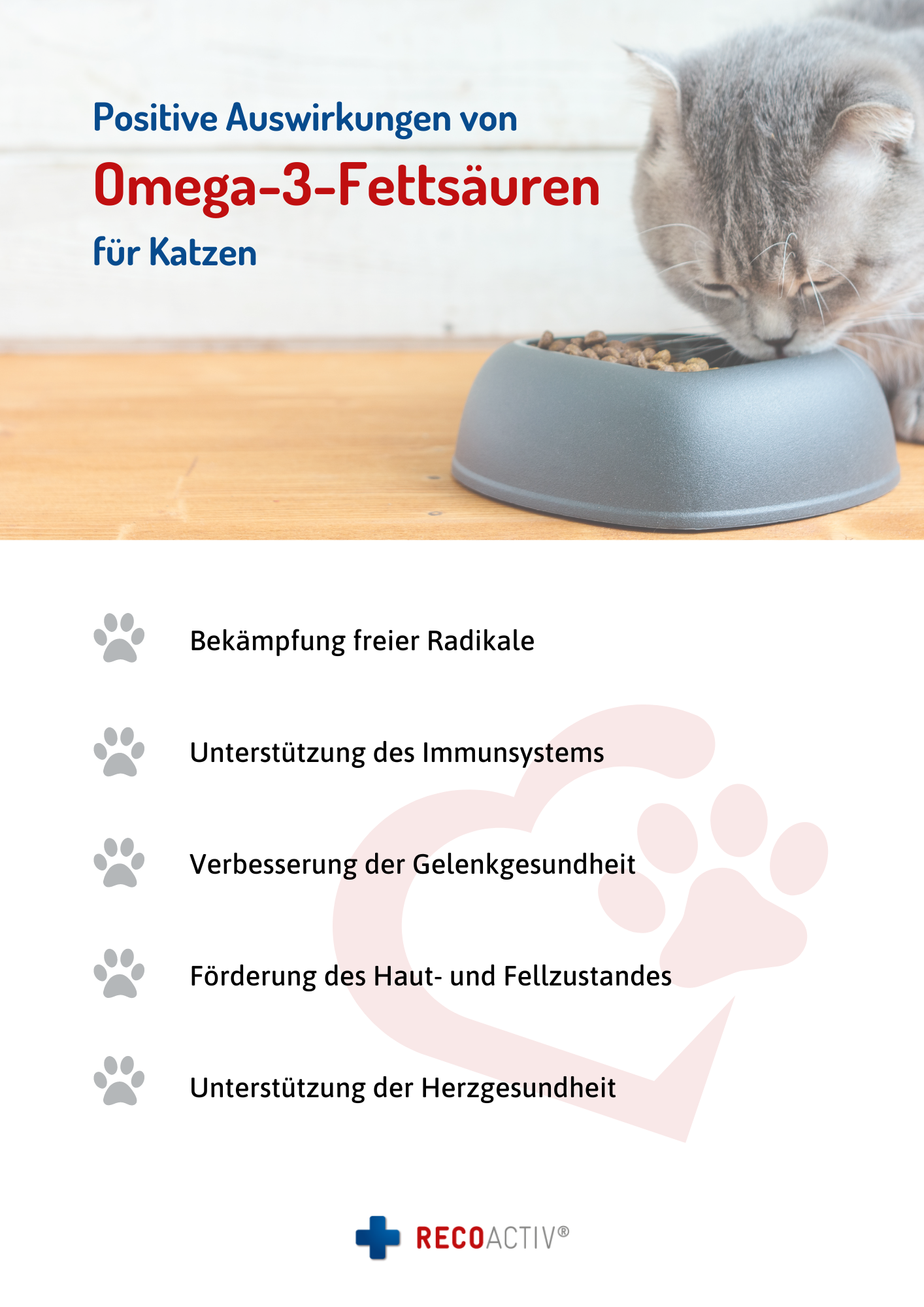
Omega-3 fatty acids play a major role in the development of young animals. However, older cats also need them due to their health-promoting effects. These can occur either directly through omega-3 fatty acids or through substances that cats form from them in the body. The most active of these fatty acids include eicosapentaenoic acid (EPA) and docosahexaenoic acid (DHA).
Free radicals are thought to be responsible for damaging brain cells and are therefore considered possible triggers for dementia. A balanced diet with EPA and DHA can counteract these effects.
Choline
The substance choline is semi-essential, meaning that it can be produced by a healthy cat's body in sufficient quantities. For this to happen, enough essential fatty acids must be provided through food. If these are present in insufficient quantities or cannot be adequately absorbed by the body due to the cat's old age, cognitive problems can arise due to choline deficiency.
Primarily, choline is vital for brain and nerve cells. It is predominantly found in the cerebral cortex, where it keeps many millions of cells alive. Furthermore, it is one of the few organic substances that can cross the blood-brain barrier. In the brain, choline is then converted into acetylcholine, an important neurotransmitter responsible for healthy signal transmission in the nervous system. Choline can slow down the degradation process in the brain when dementia begins.
Tryptophan
Tryptophan is an essential amino acid. Cats need it in their bodies, but they cannot produce it themselves. Instead, it is necessary to provide sufficient tryptophan daily through cat food. Tryptophan performs important functions in the cat's body. For example, it affects the animals' behavior and mood by balancing and regulating them.
What Nutrients Do Cats Need?
Every cat – whether healthy or suffering from an illness like dementia – needs various nutrients in its body. These include, for example, vitamins, minerals, and proteins, as well as fats and oils. For a cat to remain healthy for as long as possible, it needs a sufficient daily intake of these nutrients with its food or through supplements.
Proteins
Proteins include albumins and amino acids. While albumins are important for maintaining body substance and contribute to energy production, most of the energy production is covered by amino acids. Important amino acids for cats are:
- Taurine: helps bind bile salts, regulates body temperature, and contributes to healthy brain development
- Arginine: plays an important role in the urea cycle
Fats and Oils
Cats need fats such as goose fat or beef tallow, as well as oils. Salmon oil for cats is particularly palatable and digestible. It is important that cats absorb enough linoleic acid with their daily food, as it is also an essential fatty acid. In the body, arachidonic acid is produced from it. This is important for the body's immune system and is usually present in sufficient quantities in animal fats.
Carbohydrates
Cats are known carnivores and primarily eat prey animals in their natural environment. These typically contain a larger amount of proteins and fats, but also fermented carbohydrates in the form of pre-digested plants. The tolerance threshold for carbohydrate utilization in cats is quite low. This is why they should not consume too many carbohydrates through their food. To ensure a species-appropriate diet, they should only be present in small amounts.
Fiber
Food cellulose and wheat bran are insoluble fibers. These support digestive activity in cats' bodies.
Vitamins A, C, and D
Like humans, cats need vitamins for various bodily functions. Vitamin A is important for eyes, bones, skin, and fertility. However, cats' bodies are unable to convert provitamin A into vitamin A because they lack an important enzyme for splitting these substances. Therefore, it is crucial that cats ingest vitamin A through their diet.
Vitamin C, on the other hand, can be produced by cats themselves, but only in small amounts. Thus, the vitamin must also be supplied through feeding. Especially old and stressed cats often have a higher vitamin C requirement, which is why feeding them appropriate supplements is recommended. Cats that primarily live outdoors can form the substance from the liver and other components of prey animals.
Minerals
Minerals serve vital processes in the body. They are important for heart rate, muscle contraction, and a stable skeleton. Minerals are divided into bulk and trace elements.
Bulk elements:
- Calcium
- Potassium
- Magnesium
- Phosphorus
Trace elements:
- Iron
- Iodine
- Selenium
- Zinc
A balanced and species-appropriate diet includes all important minerals.
Conclusion
Cats can also suffer from dementia, although in their case, it is referred to as cognitive dysfunction. This often affects older cats. It is important to observe a cat showing initial symptoms of dementia closely and take them to the vet immediately.
Possible signs of dementia in cats include incontinence, disorientation, and changes in social behavior. However, since these abnormalities can also occur for other reasons, it is important to first establish a diagnosis.
If a cat has been diagnosed with cognitive dysfunction, it can be treated accordingly. However, once brain cells have degenerated, they cannot be restored, which means that the disease is not curable. Nevertheless, one can help cats in their daily lives and enable them to continue having a good life. Cats with dementia absolutely need retreats and should not be exposed to stressful situations. Yet, especially when dementia is beginning, it is important that the cat is sufficiently challenged through play.
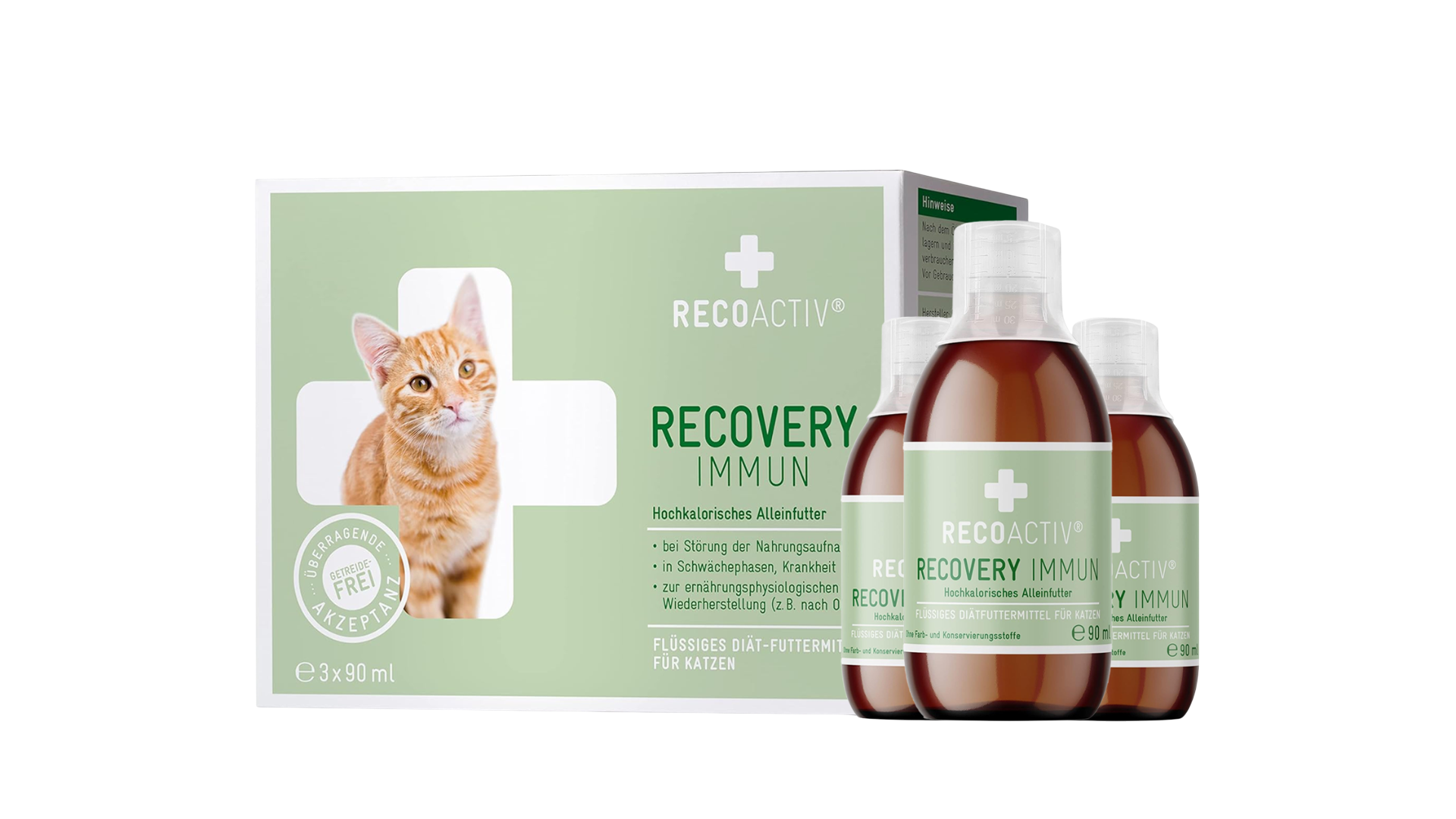
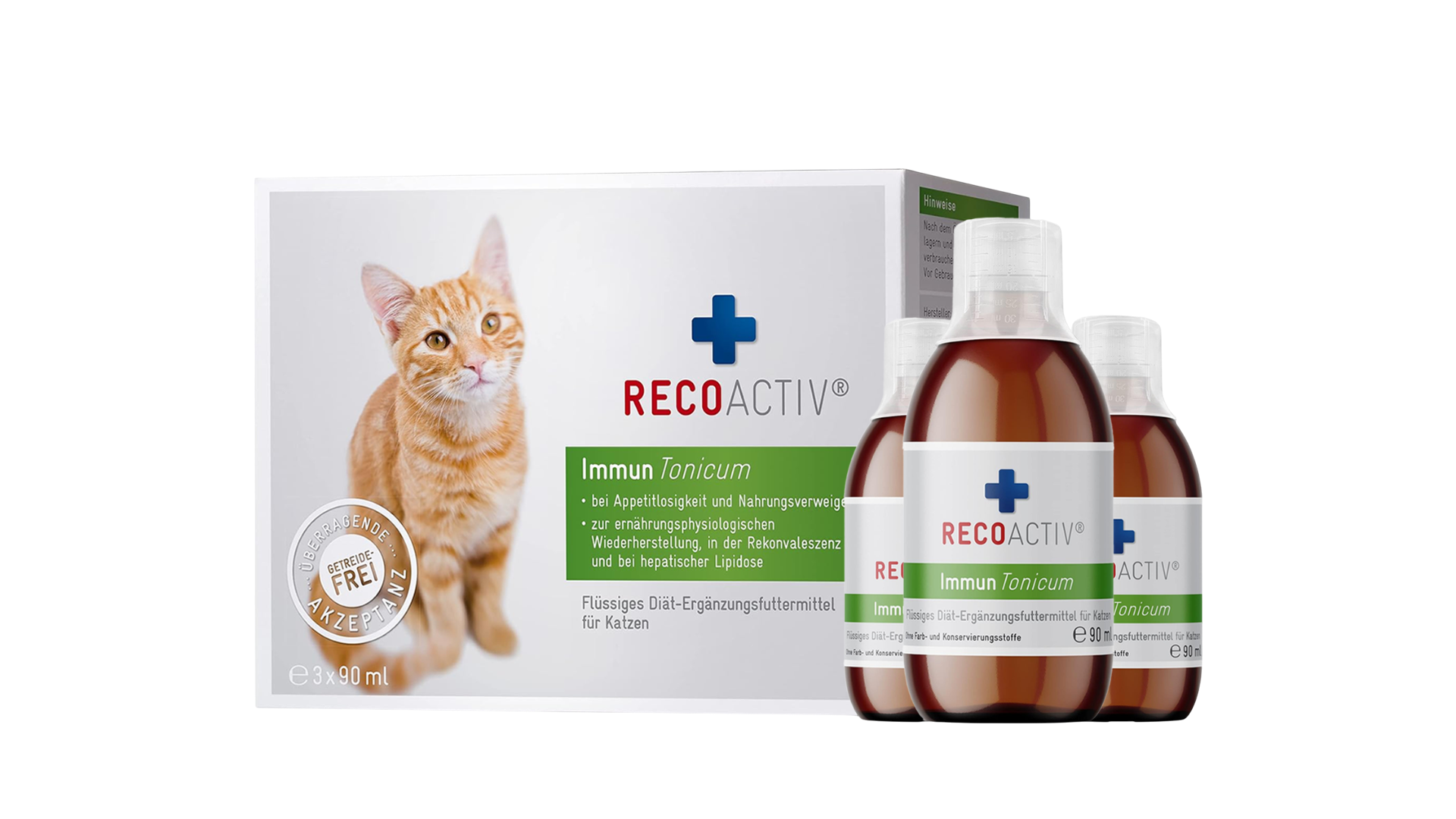
In addition, it can be useful to provide sick animals with food supplements. Cats with dementia may have altered nutrient requirements or eat less than before. In such cases, supplements that are particularly well received can help. At Recoactiv, we offer many different supplements for dogs and cats. These include important amino acids, minerals, and vitamins, which are important for both healthy and sick four-legged friends.
FAQ – Frequently Asked Questions
What is cognitive dysfunction in cats?
Cognitive dysfunction in cats refers to an age-related condition in which mental abilities such as learning behavior, memory, and attention are impaired. The term dementia is not primarily used in veterinary medicine.
What symptoms can indicate dementia in cats?
Symptoms of dementia in cats include disorientation, circadian disorientation (loss of daily rhythm), inappropriate vocalizations, decreased grooming, changes in eating habits, altered sleep-wake cycles, changes in social relationships, incontinence, general behavioral changes, changes in learning and memory, and changes in activity.
How is dementia in cats diagnosed?
Diagnosis is made through a veterinary examination to rule out other possible causes of behavioral changes such as hyperthyroidism, chronic kidney failure, or diabetes mellitus. Only after ruling out other diseases can the diagnosis of cognitive dysfunction be made.
What measures can help make everyday life easier for a cat with dementia?
Important measures include environmental adjustments, such as elevated food bowls, multiple food and water bowls throughout the home, comfortable resting places, large and easily accessible litter boxes with soft litter, quiet retreat areas, and avoiding cat flaps. Additionally, stress should be avoided, no major changes should be made simultaneously, and the cat should only be encouraged to play with toys if it enjoys it.
Why should you avoid making many significant changes to the environment of a cat with dementia simultaneously?
Cats are creatures of habit and can become stressed by too many changes at once. For a cat with dementia, additional stress can exacerbate discomfort, which is why changes should be implemented slowly and gently.
Can dementia in cats be cured?
No, dementia in cats is not curable, as dead brain cells cannot be restored. Treatment aims to make the cat's daily life easier and slow down the progression of the disease.
What role do nutritional supplements play for cats with dementia?
Special nutritional supplements can be used to support medication and therapies in cats with dementia to alleviate symptoms and improve quality of life. However, the selection should be made after veterinary consultation.
Why is it important to seek veterinary attention quickly if an older cat's behavior changes?
Behavioral changes can indicate cognitive dysfunction, but they can also be symptoms of other serious conditions such as hyperthyroidism, kidney failure, or diabetes mellitus. Prompt veterinary assessment is necessary to establish the correct diagnosis and initiate appropriate treatment.