Strengthening the Immune System – Supporting Your Dog
The immune system in dogs plays just as important a role in the body's defense against pathogens as it does in humans. If the immune system is weakened, there is a high probability that the dog will suffer from illnesses more often. Fortunately, a dog's immune system can be actively strengthened to maintain its health. A balanced and healthy diet combined with plenty of fluids is important in this context.
In this article, we provide tips on how to strengthen and maintain a dog's immune system.

The Role of the Immune System in Dogs
A healthy immune system protects the dog's body from pathogens, toxins, and pathological changes in cells. For this defense to function, it must be intact and efficient.
A healthy immune system can protect the body from invaders, pathological cell changes, and toxins. It is a defense system of the body that is confronted daily with germs, bacteria, and viruses.
For it to effectively ward them off, it must be intact and strong. Only then can it protect its own cells and at the same time attack dead and harmful cells to protect the body. Most diseases in dogs only occur due to an existing immune deficiency.
Both cells and organs, as well as endogenous substances, are involved in these complex processes. A distinction is made between two different defense mechanisms: non-specific and specific defense.
Non-Specific Defense
Non-specific defense is innate. Healthy dogs are therefore born with it. The immune cells are also called "phagocytes" or "killer cells" and have the task of attacking toxins, germs, and other harmful substances.
A dog eating grass is exposed to the risk of ingesting plants that are contaminated with pathogens. If this behavior is observed frequently, it should be checked by a veterinarian.
Specific Defense
In contrast to non-specific defense, specific defense is acquired over the years and becomes stronger over time. It is a learning process of the immune system, which specifically acts against antibodies it already knows. In addition, vitamins for dogs can support the development of a healthy immune system.
The two defense systems are interconnected and overlap. Only an intact immune system can function as the first barrier, successfully warding off potential pathogens.
When Does the Immune System Need Support?
A healthy immune system doesn't always need help. However, support can be beneficial if the dog is particularly challenged by illnesses, medication, young age, or intestinal problems.
A well-functioning immune system does not necessarily need support. However, this changes if, for example, it has to perform exceptionally well, as in these possible cases:
- Chronic Infections: If the immune system is fighting such infections, immunomodulation should take place. This refers to changing the immune response.
- Chronic Diseases of Important Metabolic Organs: Besides the brain, the immune system requires the most energy because it has to ward off pathogens daily and, incidentally, regulates the healing and repair of possible organ damage. In chronic diseases, the immune system can be so challenged that it reaches its capacity limits. Support can be provided by specifically boosting the energy metabolism in the mitochondria.
- Inexperienced Immune System: Puppies and young dogs do not yet have a fully mature immune system. Nevertheless, they come into contact with many pathogens, for example in puppy playgroups. Similar to kindergarten children, their body's defenses can develop through this. To best support young dogs, they can be given dietary supplements.
- Medication: The immune system is suppressed, for example, by the administration of cortisone. On the one hand, this is sensible and necessary for certain diseases, but on the other hand, it can also lead to an increased susceptibility to infection. In this case, alternative natural defense functions should be strengthened.
- Damaged Intestinal Barrier: Due to intestinal parasites such as Giardia, allergies to certain components of food, or the administration of antibiotics, the intestinal wall can become more permeable. The consequence: The immune system comes into contact with many more potential threats that it suddenly has to deal with.
The Influence of the Intestines
The gastrointestinal tract in a dog's body has a particularly large surface area. For this reason, various pathogens can easily penetrate the interior through it. A large part of the immune system is located directly near the gastrointestinal tract, an example of this: the tonsils.
But also in the rest of the gastrointestinal tract there are numerous lymph nodes. From them, the immune cells migrate into the intestinal wall to "look out" for hostile pathogens.
Inside the intestine, there is a mucous layer with antibodies and, under normal circumstances, a healthy intestinal flora. Both counteract the colonization of harmful germs. This is referred to as the intestinal barrier. It can fail if, for example, the intestinal flora is disturbed or the intestine is inflamed. Another possible reason is the impairment of the immune system.
Thus, pathogens can cause damage in the intestine or even penetrate the dog's body, where they finally multiply. Strong physical or psychological stresses, such as stress, often have a negative effect on the intestinal barrier.
The Right Food
An important role in maintaining a healthy immune system in dogs is a balanced and species-appropriate diet. Only through high-quality dog food can a dog receive all the nutrients it needs, among other things, for the proper functioning of the stomach and intestines, as well as for a strong immune system. Nutrient-rich food strengthens the gastric mucosa, and good bacteria and immune cells multiply.
If the food, on the other hand, is unnatural, this often means a lack of important nutrients. For example, pathogenic synthetic substances can attack the intestinal mucosa and cause the intestinal wall to become more permeable. As a result, invaders can no longer be fought off as well by the immune system and kept away from the body.
High-quality dog food should be easily digestible and free of synthetic nutrients. Natural substances are characterized by better bioavailability and are also better utilized by the dog's body. Valuable fiber serves as food for good bacteria in the intestine.
It is also important not to disregard that the food is adapted to the specific needs of the dog breed, age, and health condition. Dogs that have a higher nutrient requirement for any reason should receive supplements with the appropriate substances.
Naturally Strengthening the Immune System
The best way to support a dog's immune system is through natural measures. These include good food, exercise, rest, sufficient water, and as little stress as possible.
The most effective and healthiest way for a dog is to strengthen its immune system naturally. In addition to nutrient-rich food, this includes the following measures:
- Regular walks in the fresh air.
- Avoidance of overexertion and stress.
- Sufficient sleep and rest periods.
- Dietary supplements that strengthen the immune system.
- Adequate water intake.
- Regular veterinary check-ups.
Balanced Nutrition
It is important for a healthy and strong immune system that the dog has a balanced diet. This means that it should be able to absorb all important nutrients, including vitamins, minerals, proteins, fats, and carbohydrates, through its food. Important trace elements are, for example, iron, iodine, and zinc.
Intestinal bacteria are also important because they ensure a healthy intestinal flora and thus have a great influence on a functioning immune system. In fact, the majority of all immune cells are located in the intestine.
Sufficient Fluids
For a dog's body to function properly, it needs fresh and clean water daily. It is the dog owner's task to provide this. If, however, the dog frequently drinks from muddy puddles outside, there is a risk that it will become infected with pathogens that are common there, which can ultimately also contribute to weakening its immune system.
Mix of Rest and Exercise
Dogs should exercise regularly in the fresh air. This promotes their circulation and stimulates metabolism. Only in this way are nutrients converted into energy in the body, which in turn is important for the best possible setup of the immune defense.
However, it is equally important that the dog is given sufficient rest periods in which it can regenerate. Not least, the psyche benefits from this. Not only we humans, but also dogs are much more balanced and content if they get enough sleep and can recover from the day's events.
What Gets the Immune System Going?
The body needs energy for every defense reaction. This is provided in the mitochondria and depends, among other things, on vitamins, trace elements, and antioxidants.
Defense reactions are constantly occurring in a dog's body, and these require energy. It is generated and provided by the mitochondria - or the "powerhouses of the cells." However, if mitochondria do not work properly, this energy is lacking for the immune system.
To understand what mitochondria need to function properly, one must first look at energy production in the cell powerhouses. For this to work flawlessly, many small intermediate steps and enzymes are necessary. But these also need help, in the form of so-called C-factors, to be able to work well. Helpers are vitamins, trace elements, and minerals.
While energy is produced in the mitochondria, however, chemical and aggressive compounds are also formed - called oxidants and free radicals. If these are not stopped by antioxidants, body cells can be severely damaged by them.
The safety systems in the dog's body usually help against these attackers. However, in stressful situations, these can be overwhelmed. Oxidative stress occurs when the balance between oxidants and antioxidants is disturbed. In the worst case, this can lead to the death of affected cells, but in any case, their natural function is at least disturbed.
Oxidative stress often plays a major role in the development of chronic diseases or in the impairment of the immune system.
The Energy Boost for Your Dog's Immune System
If the supply from regular food is insufficient, suitable supplements can be beneficial. This is especially true for weakened, older, or heavily stressed dogs.
To support your dog's immune system as best as possible, you should ensure with the right food that the mitochondria can work well. Relying solely on the main food is unfortunately often not enough. In the following cases, support through high-quality dietary supplements for dogs can be important:
- Constantly ailing dog.
- Increasing health problems with advancing age.
- Existing chronic illness.
- Recovery from surgery or a serious illness.
- Presence of unusual stresses, such as social stress with other dogs or physical stresses such as dog sports.
Ideally, the supplementary feed is not given only when the dog is already experiencing the consequences of its weak immune system. The additional nutrients can already make an important contribution to maintaining the health of the natural defenses as a preventive measure.
Propolis
Propolis is known to act similarly to antibiotics. Therefore, it can be used to strengthen the body's defenses, but also for bacterial infections. It also plays a role in what is known as intestinal cleansing.
Echinacea
Echinacea is an active ingredient from coneflower that can increase the number of white blood cells and promote the formation of antibodies. In this way, it is possible to prevent infections that affect, for example, the respiratory or urinary tract.
Vitamins and Antioxidants
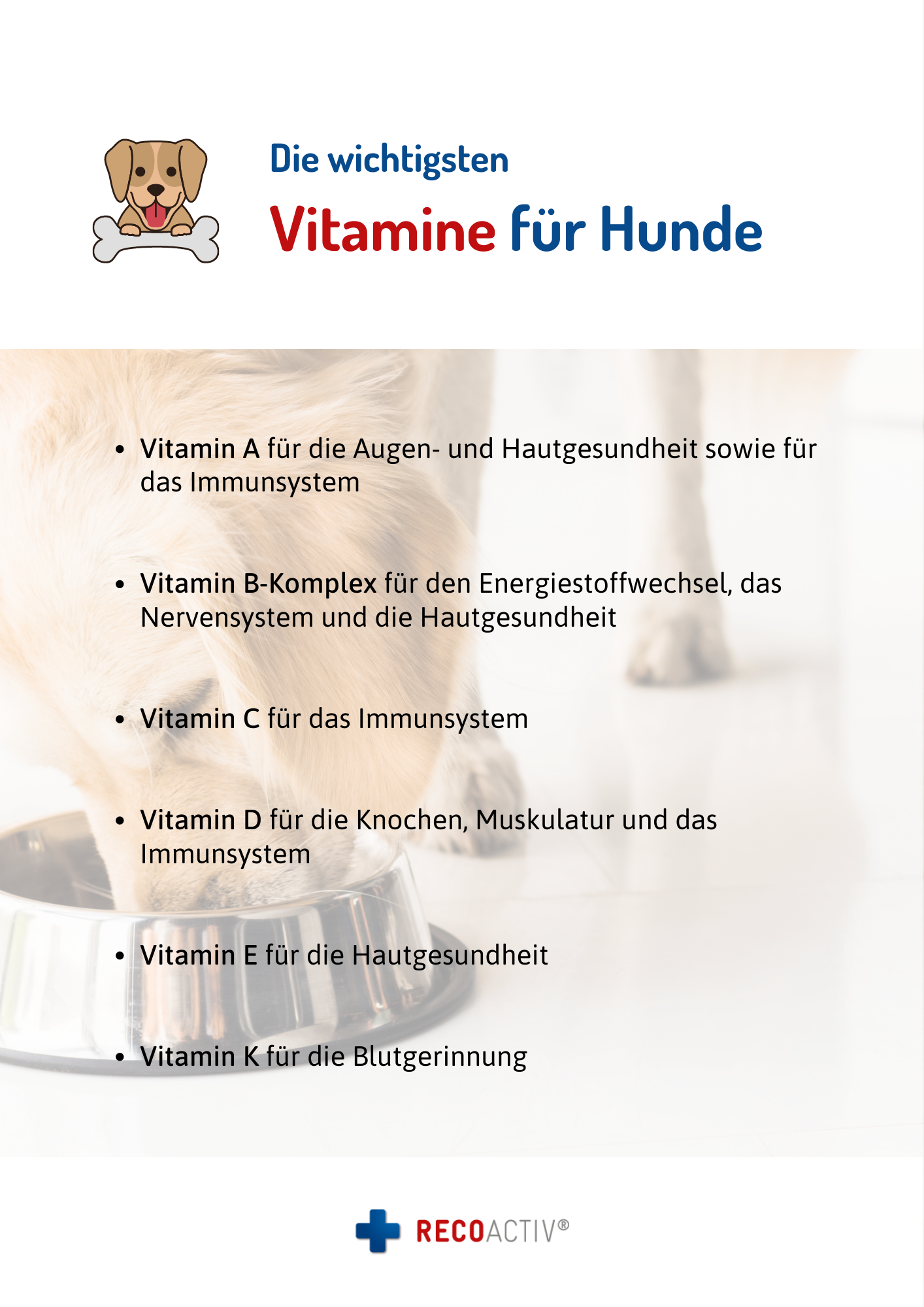
If a dog lacks important vitamins and antioxidants, these can also be given via dietary supplements. Natural supplements include rose hips with vitamin C or black cumin oil. The latter has an antioxidant effect and can protect the dog from oxidative stress, so that the dog's cells remain healthy.
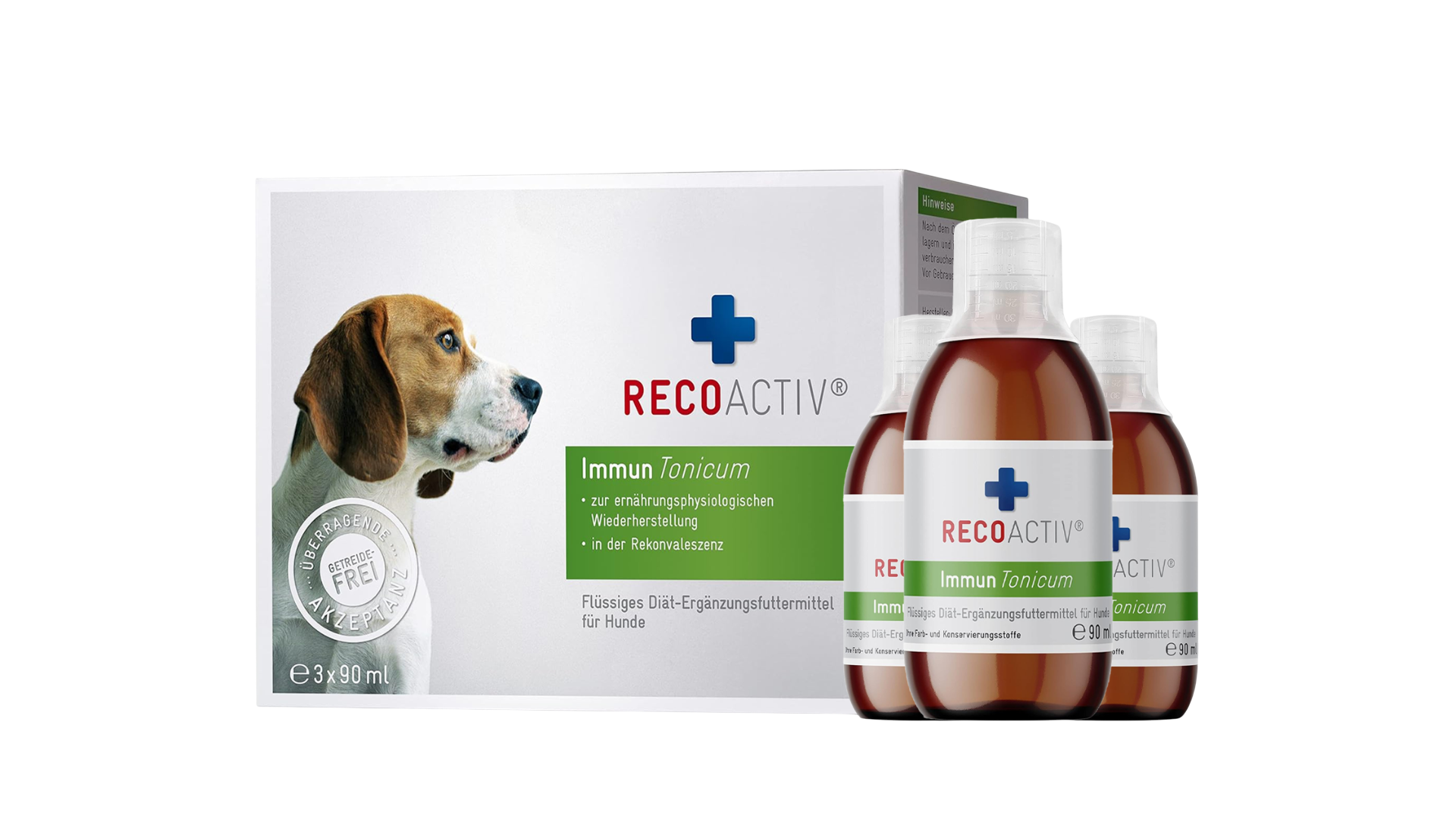
We recommend our Immune Tonic for dogs to strengthen the immune system, as it is very well accepted. Due to its liquid texture, it is also suitable for weakened dogs who temporarily find it difficult to chew solid food to cover their nutritional needs. All our products contain important vitamins and trace elements, and they consist exclusively of natural ingredients and are free of sugar, grains, colorings, and preservatives.
FAQ
A strong immune system can be supported primarily by good care, appropriate nutrition, and an adequate supply of nutrients. If necessary, supplementary measures can be beneficial.
What demonstrably strengthens the immune system?
A dog's immune system is strengthened by regular walks, but also by sufficient sleep and rest periods. Stress and overexertion, on the other hand, should be avoided as much as possible. The dog needs fresh water in a clean bowl every day. For many dogs, the administration of immune-boosting dietary supplements is also useful. In addition, the dog should be regularly examined by the veterinarian.
Which dietary supplements for dogs?
Our Immune Tonic for dogs contains all the important nutrients a dog needs to strengthen its immune system. Due to its liquid form, it is generally very well accepted. This dietary supplement contains important vitamins and trace elements as well as natural ingredients of food quality.
Do dogs have a strong immune system?
How strong a dog's immune system is depends, among other things, on whether it has been able to develop healthily over the years. Dogs have a non-specific defense from birth and acquire a specific defense against certain pathogens over the course of their lives that their body has previously been confronted with.
When is a dog's immune system fully developed?
In young dogs, the immune system is not yet fully developed, but over time and through external influences, it gradually forms its own antibodies. This process begins at about three months of age, but can vary from dog to dog.
Conclusion – Strengthening the Dog's Immune System
A dog's immune system works around the clock. With appropriate nutrition, sufficient fluids, rest, and targeted support, its natural defenses can be effectively promoted.
A dog's immune system has a lot to do day and night: It fends off viruses, bacteria, and pathogens, thereby protecting its own intact cells. If a dog's immune system does not function or does not function properly, there is a high probability that it will be sick more often or that illnesses will affect it more.
Dogs have a non-specific defense from birth, but over time they develop many of their own defenses. This way, their body learns to deal with pathogens and ward them off before they can cause damage.
As a dog owner, you should support your pet as best as possible in developing a healthy and intact immune system. Through food, it must be able to meet its complete daily requirement of important nutrients. If this is not possible, for example, because it is already weakened or ailing due to illness, the use of dietary supplements such as our Immune Tonic for dogs can be beneficial. This contains many important nutrients that contribute to strengthening the dog's immune system. It can also be fed preventively.
FAQ – Frequently Asked Questions
What is the role of the immune system in dogs?
The immune system protects the dog from germs, toxins, and pathological cell changes and helps to ward off harmful influences.
What does the non-specific immune system in dogs consist of?
The non-specific immune system is innate and includes, among other things, phagocytes and killer cells that fight harmful substances and pathogens.
When does a dog's immune system need support?
Support can be useful in cases of chronic infections, chronic diseases, young age, corticosteroid administration, or a damaged intestinal barrier.
Why is the gut important for the immune system?
The gut is a central part of the immune system because it contains many immune cells, lymph nodes, antibodies, and an important gut flora.
How can you naturally strengthen a dog's immune system?
Helpful measures include high-quality food, regular exercise, sufficient water, enough rest, and avoiding stress.
What role do mitochondria play in the immune system?
Mitochondria provide the energy needed for the body's immune responses and are therefore important for an efficient immune system.
Which dietary supplements are mentioned in the article for support?
The article mentions, among others, propolis, echinacea, as well as vitamins and antioxidants like rose hips or black cumin oil.
When is a dog's immune system fully developed?
The immune system of young dogs develops gradually and, according to the article, begins to increasingly produce its own antibodies from about three months of age.