Dog not eating
It is quite common for dogs to completely or partially refuse their food. A distinction is made between anorexia (the complete absence of appetite) and inappetence (the dog eats significantly less than usual or only particularly palatable food).
However, both forms are very non-specific, which is why many reasons for such behavior in a dog must be considered. It is important to try to identify these. If a dog refuses food for a long time, it can lead to significant weight loss and even severe metabolic disorders.
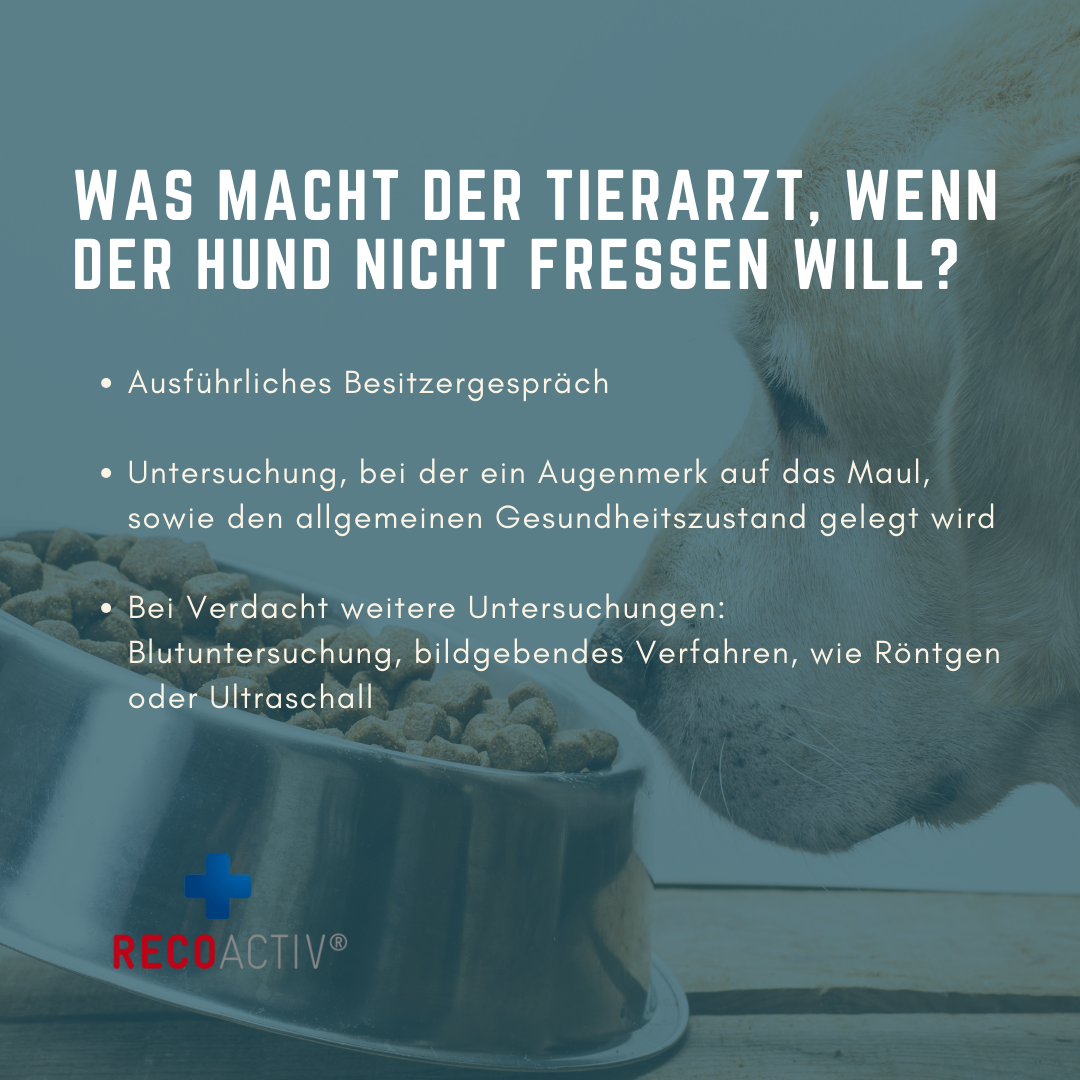
If there is no apparent logical explanation for why the dog is not eating as usual, or if additional symptoms of illness appear, the animal should be taken to a veterinary practice immediately.
If the dog refuses the bowl – possible reasons
Knowing the possible reasons for a dog's food refusal is important. However, it should be noted that a precise diagnosis can only be made by a veterinarian. They will thoroughly examine the dog and ask relevant questions about its behavior to find out the underlying cause.
The 3 most common reasons why dogs don't eat
If the dog stops eating or eats poorly, one of the following reasons is often the case:
- Psychology: Especially sensitive dogs often suffer more from anxiety and stress than others. Hormonal changes in the dog's body can also have immediate effects on its psychological state.
- Food: While some dogs accept anything you give them, others are very picky. This can lead them to completely refuse certain foods.
- Illnesses: If the dog has always eaten well and suddenly refuses all food and treats, illnesses must be considered as a cause. Only a veterinarian can help in this case.
When psychology affects appetite
Sensitive dogs increasingly struggle with stress and anxiety. Even seemingly unspectacular occurrences, such as encounters with other dogs or a change in the home's interior, can lead to anorexia or inappetence in such a dog.
If such a reason is probable, the dog owner should check what the stressors are for their dog and reduce them as much as possible. The dog may be suffering from the following situations:
- particularly strong stress/anxiety: Some dogs do not cope well with being left alone frequently during the day. But an addition to the family, constantly changing family constellations, or the death of the primary caregiver can also trigger psychological problems in sensitive animals. If there is significant noise, for example, from workmen in the house, the dog should be fed outside of working hours.
- Puberty in dogs: Like humans, dogs in their puberty often have to contend with hormonal surges and their effects. Eating is then often temporarily neglected.
- Moving: Moving to a new home or animal shelter means a lot of stress for most dogs. During this time, they should be given food that they enjoyed before the exceptional situation to avoid problems.
- Medication: Besides their desired effects, these often unfortunately have one or another side effect. If the dog regularly takes medication, the package insert should be checked. At the same time, it can be helpful to ask the veterinarian for advice.
Food quality and choice – a crucial factor
Some dogs eat anything you serve them. However, this can also become a problem if the dog is unable to recognize food that is bad for it.
Other dogs fundamentally do not accept new food or immediately notice if it is not good for their health. If there was no urgent reason for the food change, it may be necessary to return to the old food.
In any case, it is important to change food slowly. Too rapid a change without acclimatization often leads to health problems or even refusal.
Some dogs are naturally poor eaters and refuse many types of food from the outset. What can help then is explained further down in the article.
Physical ailments: diseases as a possible cause
Many diseases in dogs begin with anorexia or inappetence. Often, no other symptoms are present. Only a trained veterinarian can determine what illness the dog has. Both mild and severe illnesses can sometimes be heralded by this behavior. This is why it is so important that the affected dog is examined in a veterinary practice.
A vaccination for dogs can protect them from various diseases. The veterinarian can best assess which vaccinations the dog needs. It is then crucial to refresh them at regular intervals.
Health problems: how diseases affect appetite
Is the dog no longer eating? This could be an indication of viral or bacterial, but also urinary tract infections. Other possible diseases include kidney failure or cancer. It is understandable that a dog suffering from these and similar diseases experiences a loss of appetite. However, as already explained, a lack of appetite or complete refusal of food are non-specific symptoms.
It is important not to fall into panic or stress, but instead to proceed calmly so as not to additionally burden the dog. In a veterinary practice, it is best taken care of with these and other symptoms. For diagnosis, the veterinarian can, for example, determine the body temperature of dogs to detect abnormalities.
The dog's age – an underestimated influencing factor
As dogs get older, they generally move less. Many old dogs also sleep during the day and are harder to motivate for activities than their younger counterparts. This behavior does not have to be a cause for concern as long as the dog does not completely stop eating.
In addition, something can be done to stimulate the appetite in old dogs again. It can be helpful to buy food that suits the changed living conditions and needs of the old dog. Many manufacturers offer special food compositions for this purpose, which can be purchased in pet stores.
Because many old dogs also have an altered need for certain nutrients, it may also be advisable to give them selected food supplements with their daily food. However, this step should always be discussed with a veterinarian and never decided alone. One reason for this is that an oversupply of nutrients can lead to further health problems.
Nutrition tips and tricks
If there are no health reasons for poor food intake, it is possible to achieve improvements by changing the feeding routine. We have therefore compiled a few helpful tips and tricks:
- try a new food: This is the best way to find out if the dog generally doesn't want to eat or if it's due to the food it's always had.
- feeding schedule: If there is a fixed routine for feeding the dog, it can adjust to it. Some dogs need this to eat well regularly.
- remove the bowl again: If the dog has not touched its food after 10 minutes, it is important to remove it. Only in this way does a dog learn that food is not available to it around the clock. The more it will use the opportunity and eat it when it is served.
- no treats: As long as the dog eats its main food poorly, it is not effective to give it treats in between. Although these may taste better to the dog, they do not contain all the necessary nutrients. The negative consequence is that the dog gains weight, but is still not adequately supplied with nutrients.
- gently warm the food: Warm food smells more intensely and is therefore more tempting for eating. Dog food can be gently warmed in a water bath or in the microwave. However, it should not be too hot, so that the dog does not burn itself.
- try a new feeding location: The problem may not be with the food itself, but rather with the place where it is served. Most dogs prefer to eat their food in peace. Small rooms that are not thoroughfares are suitable for this. Strong noise, stress, and the presence of strangers during the dog's feeding should also be avoided.
- training sessions before feeding: Small training sessions can stimulate the dog's metabolism before feeding. In addition, exercise promotes appetite.
- provide variety in feeding: Some dogs do not like to be given the same type of food repeatedly. In this case, you should try to vary the types from time to time. However, this should not happen too often, as the dog might then get used to waiting for a particularly tasty food, while leaving the rest untouched out of lack of interest.
- test a new bowl: It may seem trivial, but there are dogs that prefer to eat from certain bowls. For example, aluminum bowls are unpopular because they reflect and thus distract from the food. The sound created when eating from a bowl can also be perceived as annoying by dogs. Bowls made of glass or ceramic are particularly suitable. Plastic bowls, on the other hand, usually contain plasticizers that have an inherent smell or affect the taste of the food – a circumstance that in turn can lead to food refusal in the dog.
These tips are merely suggestions. Unfortunately, there is no guarantee that they will work. Furthermore, a certain approach may work better for one's own dog than another. It is best to test several options to achieve success as quickly as possible.
If the dog's eating behavior still does not improve, you should contact a veterinarian again.
Loss of appetite: when you should really worry
So there are many things you can do if your dog has no appetite or stops eating. Sometimes this problem resolves itself quickly. In other cases, however, the dog needs help, for example, if a psychological or physical problem is behind its behavior. Then it is important to observe the dog closely to notice further abnormalities.
If your dog eats significantly less than usual and this behavior persists for 3 days, you should always consult a trusted veterinarian. In the case of acute food refusal in dogs, you must react immediately to determine the causes.
As an owner, you automatically bear responsibility for your pet and must therefore ensure as quickly as possible that loss of appetite and unwillingness to eat subside again.
FAQ
The fact that dogs occasionally don't want to eat is not always a cause for concern. Nevertheless, it is important to know the possible causes and have them ruled out by a veterinarian. In the following, we answer frequently asked questions on the topic: dog no longer eats.
How long is it normal for a dog not to eat?
It is not always problematic when dogs temporarily suffer from a lack of appetite. If a dog eats poorly for one day because it doesn't like the food offered or tolerates it poorly, it's not an emergency. However, if this condition persists the next day, one should always assume that something is wrong and contact the veterinarian.
What do I do if my dog doesn't want to eat?
If the dog suddenly refuses food, health problems must first be ruled out as causes. The dog is not eating, although there is no underlying illness? Then measures such as fixed feeding times and setting up a quiet feeding place in the house might help.
Why doesn't my dog eat and sleeps a lot?
It is noticeable if a dog not only refuses food but also sleeps more than before. Various causes must be considered for this, which only a veterinarian can determine.
How long can I let my dog go hungry?
Healthy adult dogs can certainly go without food for up to 5 days. However, this only applies if they can also consume enough fluids. But you should under no circumstances let it come to that. A dog that completely refuses its food is always a case for the vet!
Conclusion
Dogs need specific nutrients throughout the day, which they mostly absorb through complete food. If a dog suddenly refuses its food or eats worse than usual, this is often a warning sign. One should then not hesitate and have the dog examined by a veterinarian as soon as possible. If illnesses, gastrointestinal problems, or psychological causes in the dog can be ruled out, there are a few ways for dog owners to encourage their dog to eat.
In many cases, it already helps to warm up the food slightly so that it gives off a stronger smell. In addition, a quiet feeding place is important, which is not a thoroughfare in the apartment. Persistent loss of appetite can also be due to the food. Ideally, the dog should not only receive dry food but also wet food that contains a lot of meat.
FAQ – Frequently Asked Questions
What is the difference between anorexia and inappetence in dogs?
Anorexia refers to the complete absence of appetite in dogs, while inappetence means that the dog eats significantly less than normal or only accepts particularly tasty food.
What are the three main reasons why a dog might not eat?
The three most common causes are psychological reasons such as fear and stress, the choice or quality of food, and physical illnesses.
How can stress or anxiety affect a dog's eating behavior?
Sensitive dogs often react to stress factors such as being alone, changes in the family, noise, or moving with a loss of appetite, which can lead to anorexia or inappetence.
Why is a slow change of food important for dogs?
A too rapid change of food without acclimatization can lead to health problems and cause the dog to refuse the new food.
When should you absolutely take a dog that is not eating to the vet?
If the dog refuses food for a longer period, there are inexplicable reasons, or other symptoms of illness occur, you should immediately visit a veterinary practice.
What diseases can manifest as loss of appetite in dogs?
Loss of appetite can indicate viral or bacterial infections, urinary tract infections, kidney failure, or cancer.
How can you stimulate the appetite of older dogs?
You can use special food for older dogs that is tailored to their changed needs, and if necessary, give supplements after consulting with the veterinarian.
What nutritional tips does the article provide if there are no health reasons for food refusal?
It is recommended to try a new food, stick to a fixed feeding routine, and remove the bowl after about 10 minutes if the dog does not eat, to show them that food is not constantly available.