


Cat drinks a lot: When is it problematic?
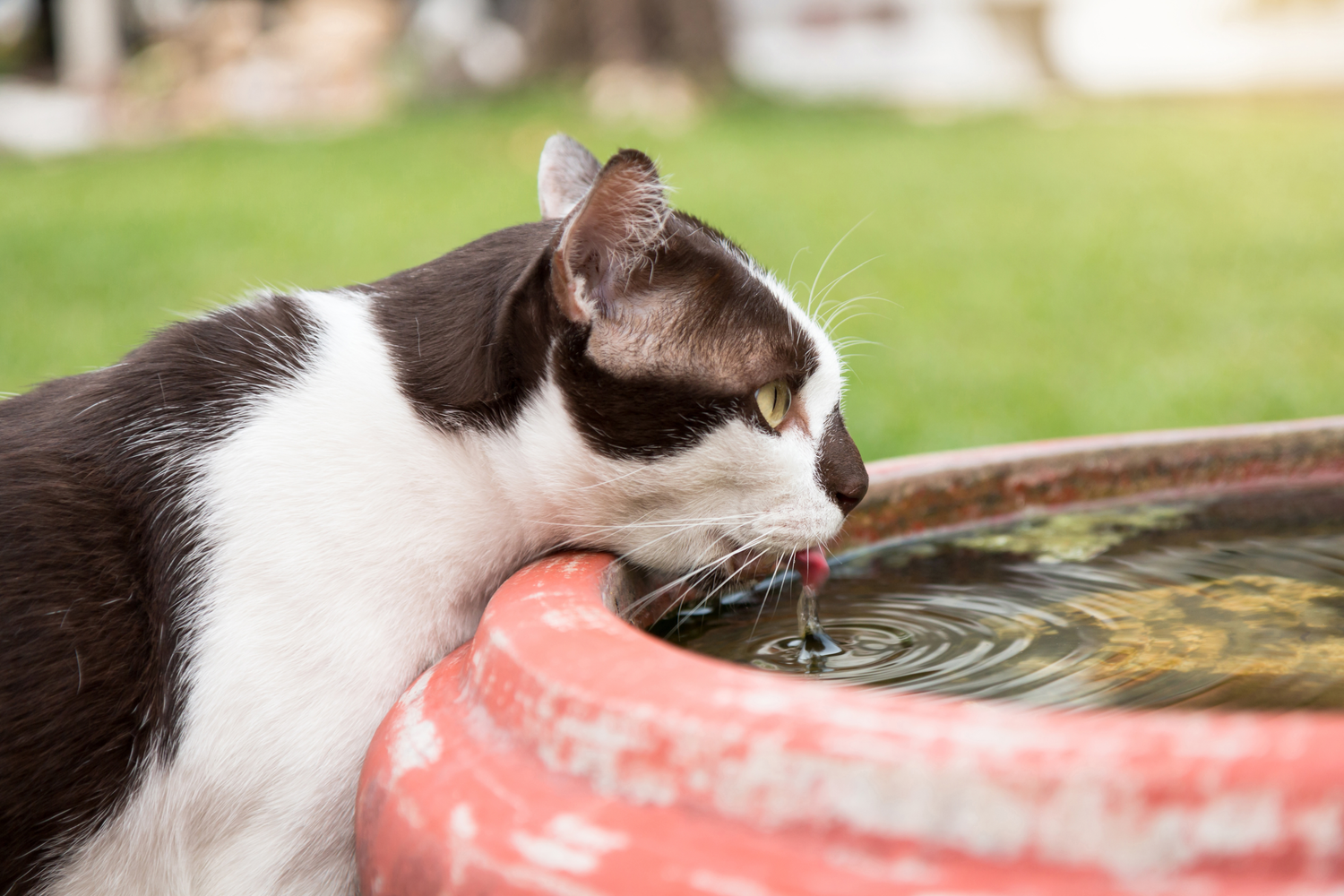
Cats need a certain amount of fluid throughout the day. Therefore, it is important that fresh water is always available to them. If a cat suddenly drinks conspicuously much, it can have harmless reasons, but also indicate health problems.
Average fluid requirement of a cat
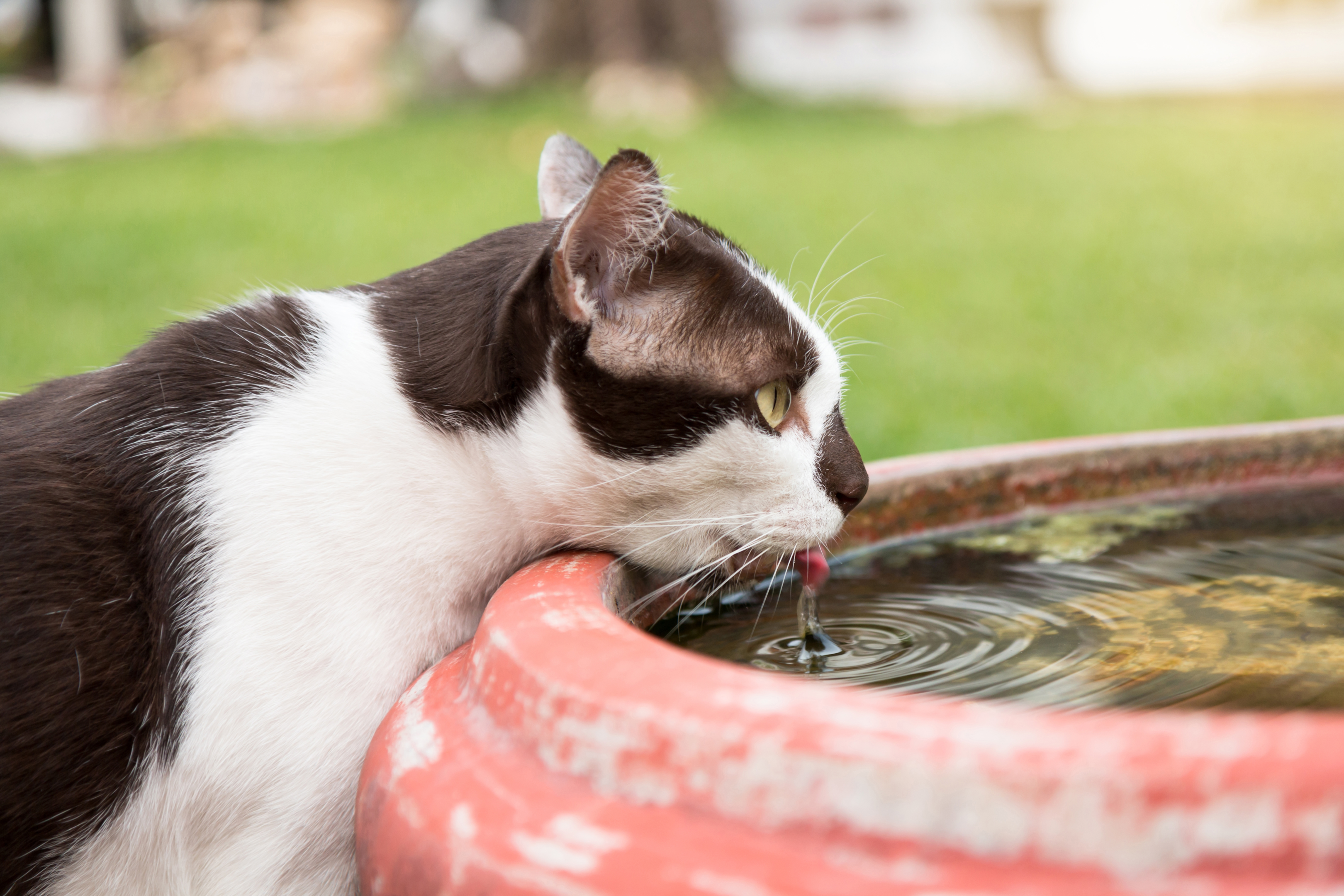
The average fluid requirement for a cat is about 50 milliliters per kilogram of body weight per day. How much of this is actually absorbed via water strongly depends on food, activity, and living situation.
The ancestors of our domestic cats originated from dry desert regions. Therefore, cats generally cope with rather small amounts of fluid and conserve water by highly concentrating their urine.
However, this should by no means lead to offering cats only little water. If a cat drinks too little, it can harm its health and, for example, promote bladder stones.
A cat weighing 5 kilograms should consume approximately 250 milliliters of fluid per day. This amount can partly already be covered by wet food.
- Type of food: With wet food, cats often drink less extra because it already contains a lot of water. Dry food, on the other hand, has a very low water content, which is why cats then usually need to drink more.
- Cat's activity: If the cat plays or hunts a lot, its fluid requirement increases.
- Special circumstances: Stress, fever, illness, as well as pregnancy or lactation can also lead to increased thirst.
Possible reasons for increased thirst in cats
If a cat drinks significantly more than usual, various causes can be considered. Besides high temperatures, more exercise, or a change in diet, other food sources or salty snacks can also be behind it.
- High temperatures, a lot of activity, or a change in diet.
- Additional feeding spots: Especially for outdoor cats, it cannot always be ruled out that they eat additionally elsewhere and thus develop more thirst.
- Salty treats: Some snacks contain a lot of salt, which can significantly increase the water requirement.
It should not be underestimated that increased drinking can also be caused by illness. Common causes are diabetes mellitus and kidney diseases. Urinary tract infections or diarrheal diseases can also lead to increased thirst.
Main signs of fluid problems
The most obvious sign is that the cat drinks more water than usual. Often, it is also noticeable that it urinates significantly more.
For indoor cats, this can usually be observed well in the litter box. For outdoor cats, the assessment is more difficult.
If the cat's drinking behavior suddenly changes, a veterinarian should be consulted. Only then can it be determined with certainty whether there is a serious underlying cause.
Additional symptoms
In addition to increased fluid intake, other abnormalities may occur. These include frequent urination, diarrhea, refusal to eat in cats, and possible weight loss.
How to diagnose health problems in cats
If an illness is suspected, the cat will be thoroughly examined in the veterinary practice. Physical examination as well as blood and urine samples are particularly important.
Typically, the abdominal area is first palpated, and then a blood and urine sample are examined. Deviating readings can indicate problems with the kidneys or thyroid.
If the cause cannot yet be clarified, further examinations such as ultrasound, X-rays, or special blood tests may be considered.
It is also important to distinguish between frequent small amounts of urine, actual polyuria, and incontinence. Therefore, cat owners should observe as precisely as possible what changes are noticeable in daily life.
Often, a urine sample is also requested. This can sometimes be collected at home or obtained in the practice. If a bacterial bladder infection is suspected, the urine must be collected sterilely.
Check if your cat is drinking excessively
The amount of water drunk can easily be measured at home. To do this, the water is measured before filling, and the remaining amount at the end of the day is subtracted.
This way, you get the actual amount of water the cat has drunk. It is advisable to record the values in a diary and also bring the packaging of the usual food to the vet visit.
Harmless reasons for a cat's increased thirst
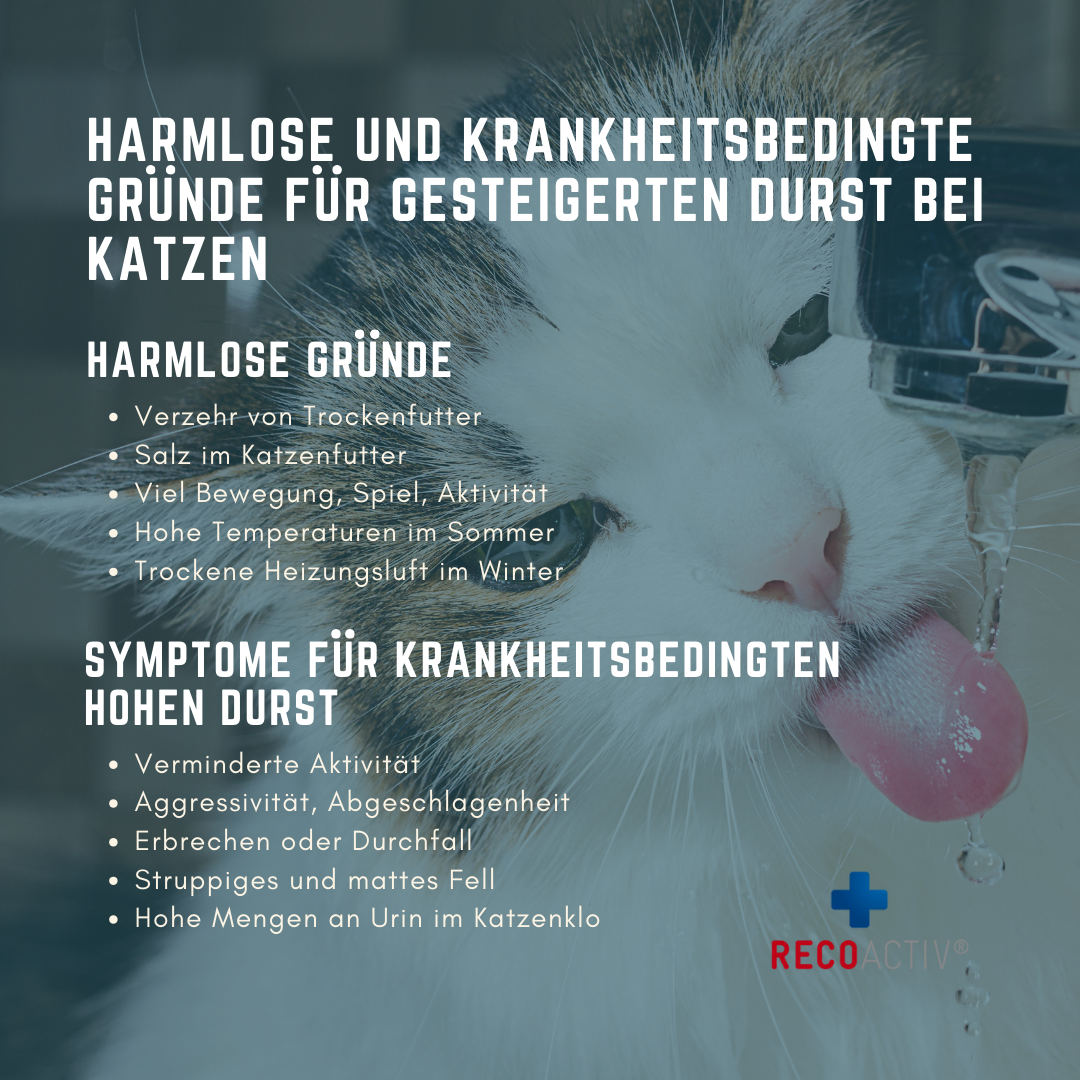
Not every increased thirst is automatically a warning sign. Often, harmless causes such as dry food, certain food ingredients, a lot of exercise, or high temperatures are responsible.
- Consumption of dry food: Dry food contains significantly less water than wet food, which is why cats often drink more then.
- Ingredients of cat food: Sugar or, especially, salt can cause the cat to feel significantly more thirsty.
- A lot of exercise: Active cats use more fluid and need to compensate for this need.
- High temperatures and dry air: In summer, cats often drink more; in winter, dry heating air can dry out the mucous membranes and also lead to more thirst.
Symptoms associated with disease-related increased thirst
In some cases, increased drinking is a symptom of a serious illness. Then other symptoms often appear that should be observed carefully.
- Reduced activity: The cat appears conspicuously quiet, sluggish, or does not want to go outside anymore.
- Noticeable behavioral changes: The character or usual behavior suddenly changes.
- Vomiting or diarrhea.
- Dull and matted fur.
- Polyuria: The cat excretes more urine than usual.
If additional symptoms occur in addition to increased thirst, the cat should be examined by a veterinarian. Metabolic diseases and urinary tract diseases, in particular, must be treated early.
Treatment methods for disease-related increased thirst
If it turns out that an illness is indeed present, the treatment always depends on the cause.
- Diabetes mellitus: Here, the food is usually adjusted and insulin is administered.
- Urinary tract infections: In many cases, antibiotic therapy is necessary.
- Idiopathic cystitis: This form of bladder inflammation is not uncommon in cats and is often associated with stress, which should be reduced as much as possible.
Conclusion
Cats need a certain amount of fluid daily, which they absorb through water and food. If drinking behavior suddenly changes significantly, it should always be checked whether harmless reasons are sufficient or whether an illness is behind it.
Not every increased thirst is immediately alarming. However, if the change persists or other symptoms occur, a veterinary examination is important.
With careful observation, measuring the amount of water drunk, and possibly a urine sample, the cause can usually be narrowed down more quickly and treated specifically.
FAQ – Frequently Asked Questions
How much fluid does a cat need on average per day?
The average fluid requirement for a cat is about 50 milliliters per kilogram of body weight per day. A cat weighing 5 kilograms should consume approximately 250 milliliters of fluid per day.
Why do cats that eat dry food often drink more than cats that eat wet food?
Dry food has a very low water content, which is why cats that eat dry food usually need to drink more. Wet food, on the other hand, already contains a lot of water, so cats often drink less extra.
What harmless reasons can lead to increased thirst in cats?
Common harmless reasons for increased drinking include high temperatures, a lot of exercise, a change in diet, consumption of salty treats, and additional food sources, especially for outdoor cats.
What health problems can be behind a sudden increase in thirst in cats?
Disease-related increased thirst can be caused by diabetes mellitus, kidney diseases, urinary tract infections, or diarrheal diseases.
What additional symptoms, along with increased drinking, indicate an illness in cats?
Additional symptoms include frequent urination, diarrhea, refusal to eat, weight loss, decreased activity, noticeable behavioral changes, vomiting, dull and matted fur, and polyuria.
How can you check at home if a cat is drinking excessively?
Measure the amount of water before filling and subtract the remaining amount at the end of the day. It's helpful to record the values in a diary and bring them to the vet visit.
What examinations does the veterinarian perform if a cat suddenly drinks much more?
The veterinarian performs a physical examination, palpates the abdomen, and takes blood and urine samples. If necessary, further examinations such as ultrasound, X-rays, or special blood tests will follow.
How is a disease-related cause of increased thirst in cats treated?
Treatment depends on the cause: For diabetes mellitus, the food is usually adjusted and insulin is administered; for urinary tract infections, antibiotic therapy is often necessary; idiopathic cystitis is often treated with stress reduction.
